Field Trip Garendon Park
Field Trip to Gardendon Park – 8 April 2026
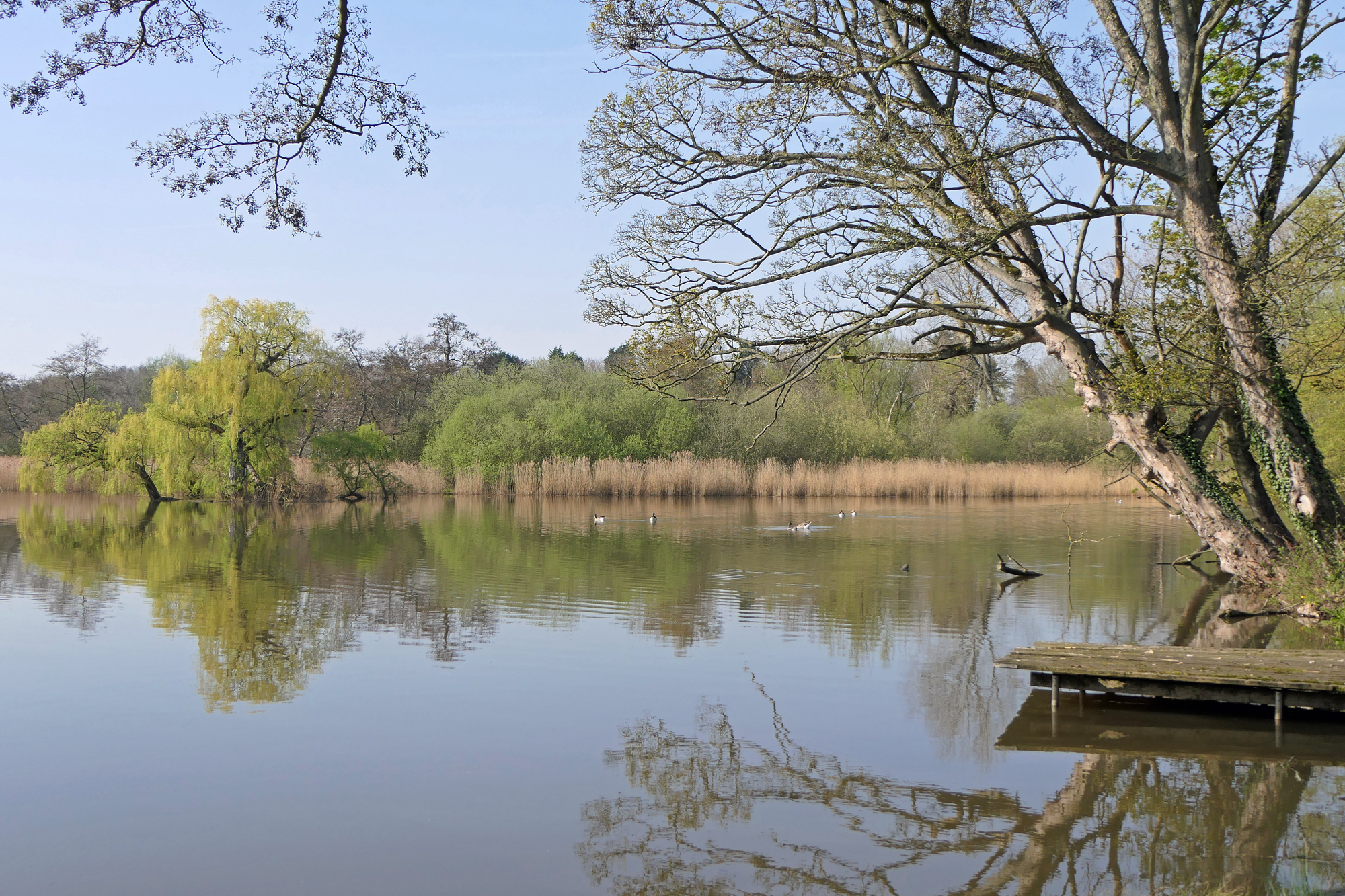
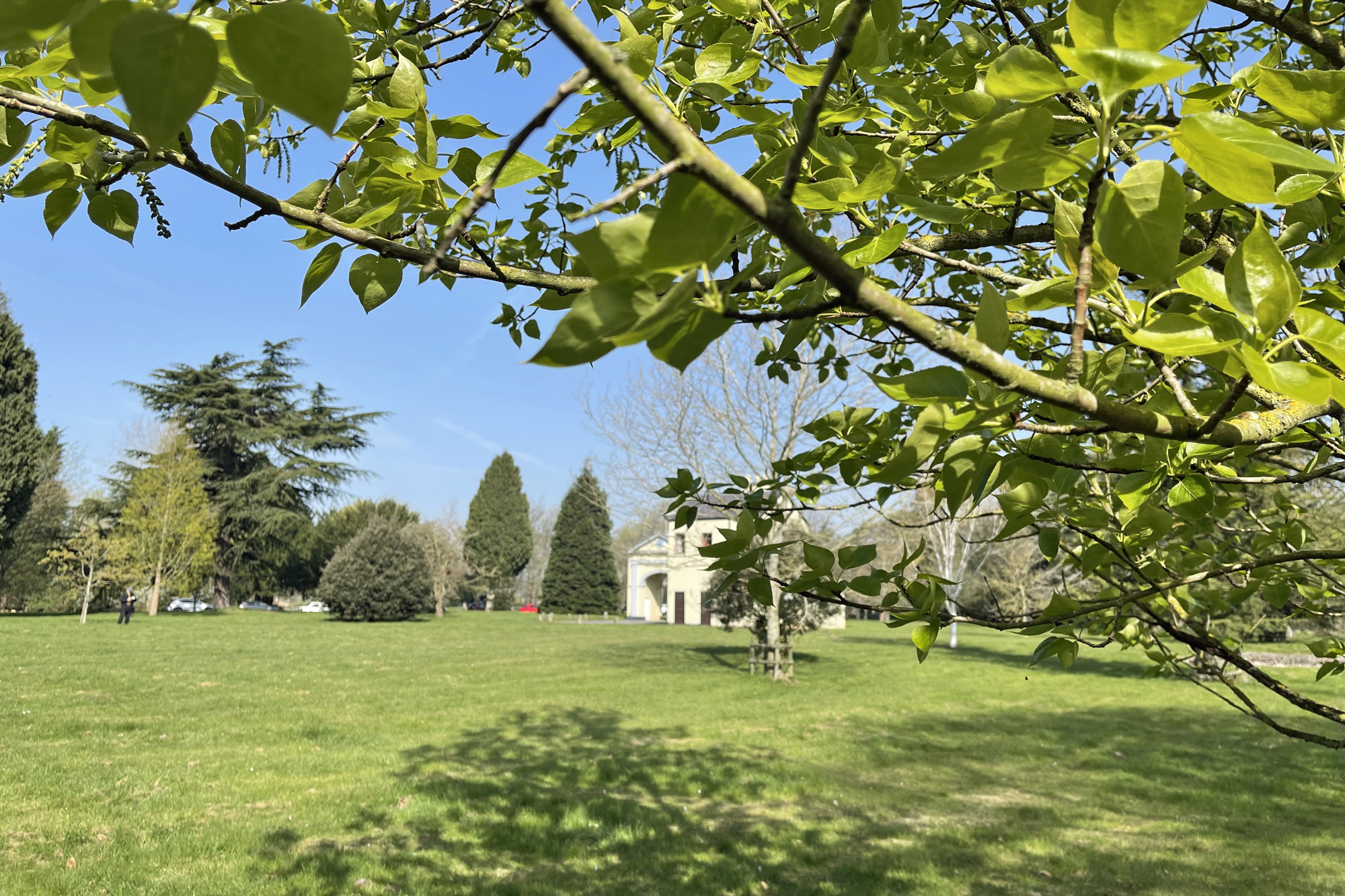
Garendon Park lies just to the west of Loughborough, and for many centuries has been under private ownership with little or no public access. It is a Grade II Registered Park and Garden, created in the 18th Century. The site was originally a Cistercian Abbey on which a Palladian mansion was built. Both were destroyed but the plans for the landscape and monuments remains. The area is very “under-recorded” from a wildlife perspective. In recent years, almost the whole historic estate has been bought by British housebuilding company Persimmon plc with plans to build more than 3,000 houses on two-thirds of the Park in the northern section. The remaining southern part of the estate will be maintained as a “Registered Park” with public access and (hopefully!) will be a sanctuary for wildlife.
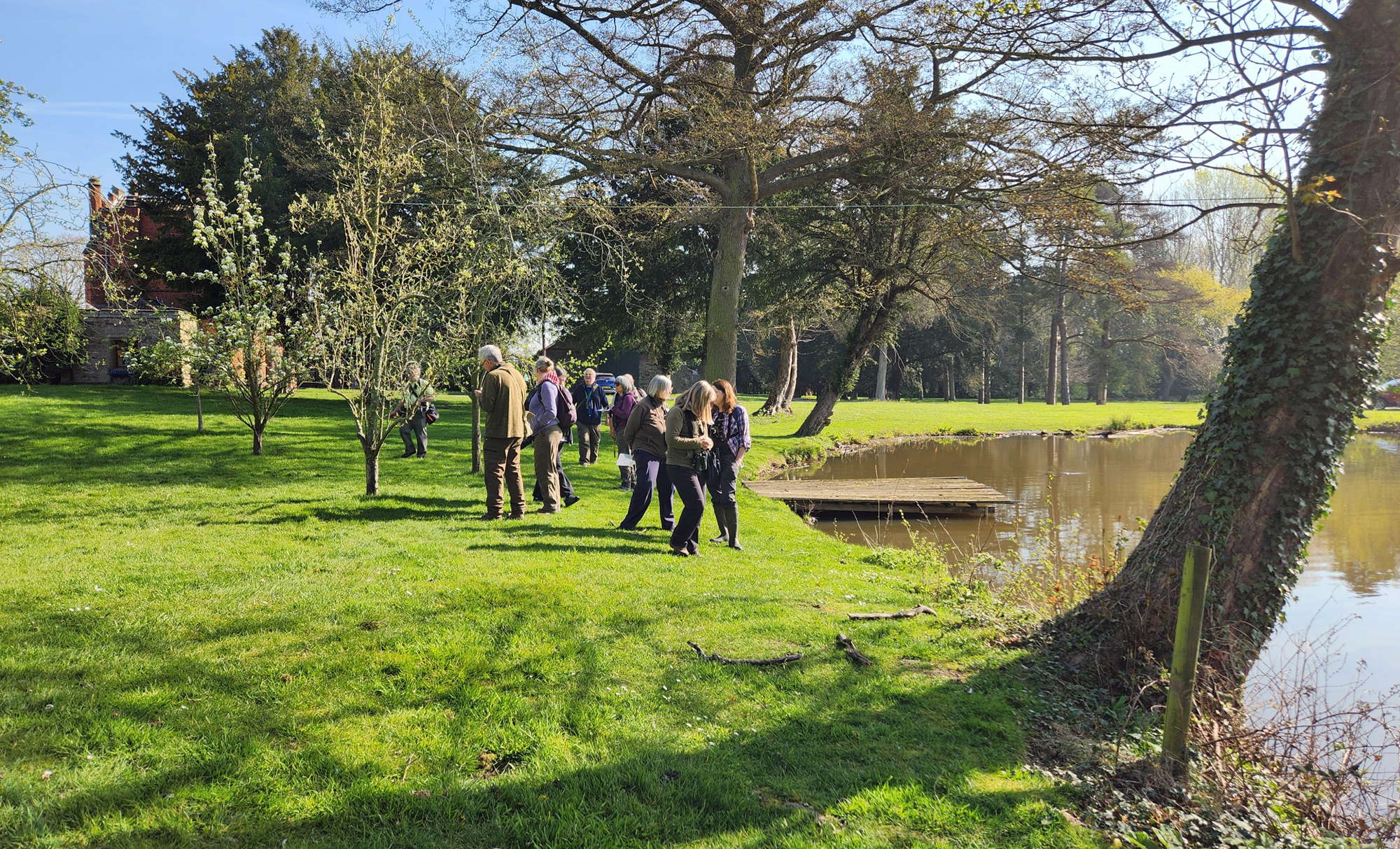
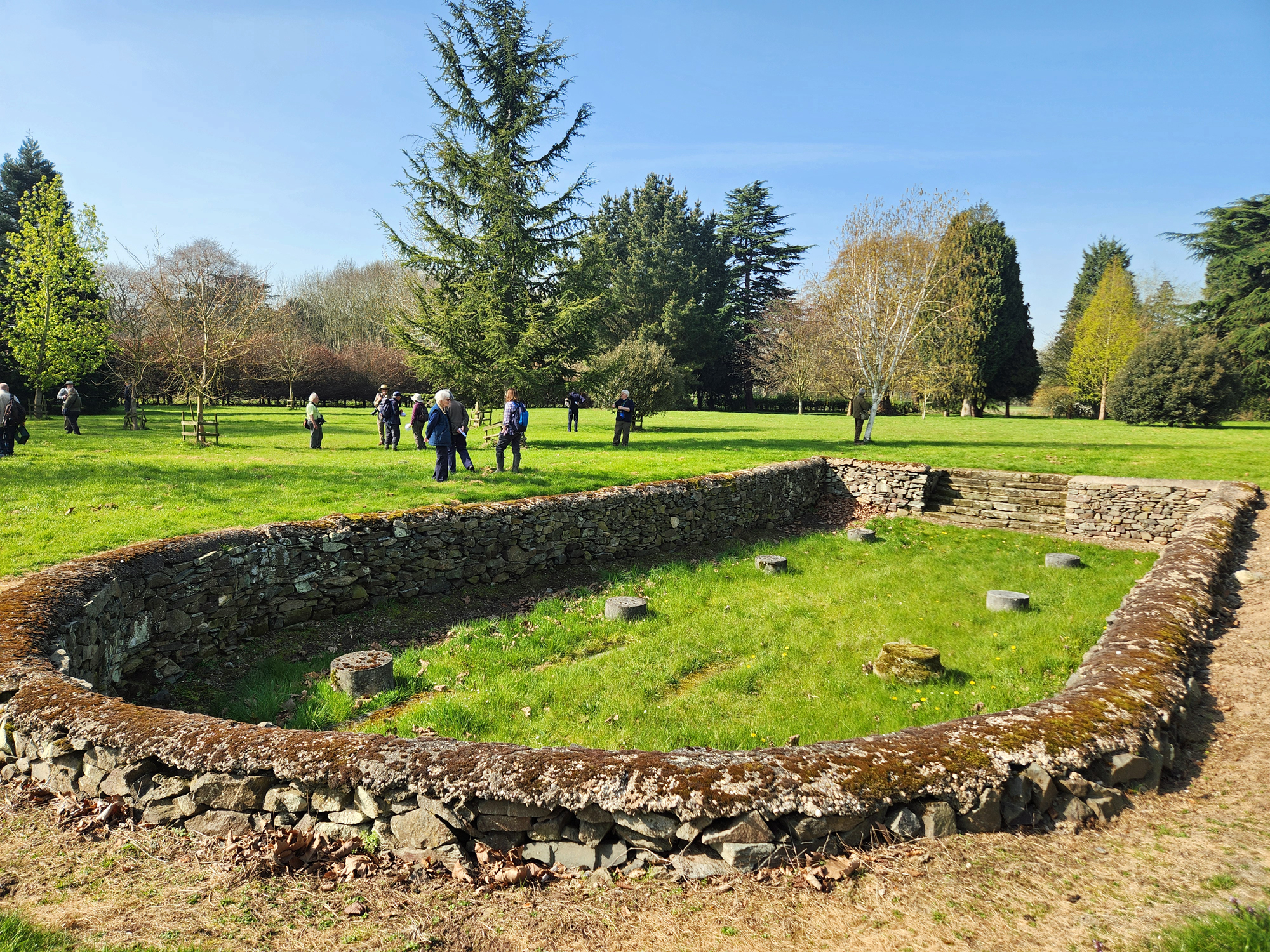
Dave Robinson arranged our visit, a Loughborough Naturalist and a member of the Friends of Garendon Park (FoGP), a group set up to ensure the Park is restored to a high quality and meets all the planning obligations. This visit was seen as a great opportunity to survey for wildlife before development starts; to set a baseline against which the effects of adjacent building activities can be assessed. The Friends are keen to record as much wildlife as possible. The area explored was the area around the lake, around the remains of the Abbey and the overgrown gardens. Since 2025, butterfly and bird transect surveys have been established, moth trapping has occurred and bats have been monitored. Other wildlife such as plants, insects (other than lepidoptera), including beetles, bugs and flies, and fungi etc. have been very little recorded so far.
This report has a dual purpose: the first is to give the regular Field Trip Report for Loughborough Nats Members, both those who visited and those who didn’t, whilst the second is to provide FoGP with as much information as possible about the species in their area.
History of the Estate
- 1133 – Cistercian Abbey (“daughter” Abbey of Waverley in Surrey) was founded along with fishponds which are now the lake. The Chapter House has been excavated which gives an indication of the size of the Abbey. Numerous photos and recreation illustrations are available on-line.
- Following the dissolution by Henry VIII in 1536, the estate was given to Thomas Manners, 1st Earl of Rutland, who built the first home, Garendon House.
- In 1632, it was given as part of a dowry for the marriage of Lady Katherine Manners (daughter of the 6th Earl of Rutland) to George Villiers, 1st Duke of Buckingham.
- It was sold in 1684 by George Villiers the 2nd Duke of Buckingham to Sir Ambrose Phillips, a wealthy Lawyer and Judge.
- Sir Ambrose also then acquired the Grace Dieu Estate in 1690.
- The Estate passed into the hands of his son William and then two grandsons Ambrose and Samuel Phillips, also Earls of Rutland. The grandson Ambrose, an accomplished gentleman architect, travelled widely on the traditional European Grand Tour gaining inspiration for construction of the Palladian follies on the estate beginning in 1734 and stated to landscape the grounds. He also started to redesign, extend and rebuild Garendon House in the Palladian style, developing it into what would be known as Garendon Hall. However, the work remained unfinished in 1737 when Ambrose died childless; it was completed by his brother Samuel, who inherited the estate (but who also died childless).
- It was then inherited by a cousin, a son of the daughter of the first Sir Ambrose who had married Edward Lisle and had 20 children bearing the name De Lisle.
- The estate then eventually passed down to Ambrose Charles Lisle March Phillipps De Lisle (1809–1878). Ambrose was an enthusiast for the Gothic Revival and planned to demolish the original hall, commissioning Augustus Pugin (famous for his work on the Houses of Parliament) to design a replacement. Ambrose’s finances were in decline, however, and the work could not be undertaken. Following Ambrose’s death, the family were left with a difficult financial situation and needed to retrench. In 1885 they moved out of Garendon and into Grace Dieu Manor. A revival in their fortunes in the early 20th century permitted a return to Garendon in 1907.
- The family were again forced out of the house during the Second World War, when it was used, and heavily damaged, by the army.
- On their return, the ever-increasing cost of running and maintaining the building, their own failing finances and crippling inheritance taxes, and threats to the house’s parkland from the urban sprawl of Loughborough and the construction of the M1 motorway which would cut directly through the park, all contributed to the decision to demolish Garendon.
- In June 1964 the house was deliberately set on fire to provide practice and training for the local fire brigade.
- It was then reduced to rubble which was used in the construction of the M1 motorway.
The Palladian Monuments
- The Triumphal arch has engravings of the Greek Gods Artemis and Actaeon, Artemis being the goddess of hunting, wilderness, wild animals, transitions, nature, vegetation, childbirth, care of children, and chastity. She was often said to roam the forests and mountains, attended by an entourage of nymphs. Actaeon was a Theban hero and hunter who, after accidentally seeing the goddess Artemis bathing, was transformed into a stag and killed by his own hounds.
- The Obelisk, constructed in the 1730s is of red brick, rendered, on a thick iron plate on four ball feet, and standing on a stone pedestal with cornice and base moulding.
- The Temple of Venus is built of ashlar, with carved oak entablature and copper dome. Its circular plan is loosely based on the Temple of Vesta at Tivoli. It is raised on four steps, with a peristyle of Ionic columns, the entablature painted white, with the frieze of Ox skulls and small bays with swags between. There are also carvings of Lions’ heads. The interior originally contained a statue of Venus, now lost, perhaps destroyed by Luddite rioters in 1811.
- Both the Arch and the Temple are on the ‘Heritage at Risk Register’. As part of the housing development, Persimmon plc intends to undertake restoration of the main structures.
Results of Loughborough Nats Survey and Species List
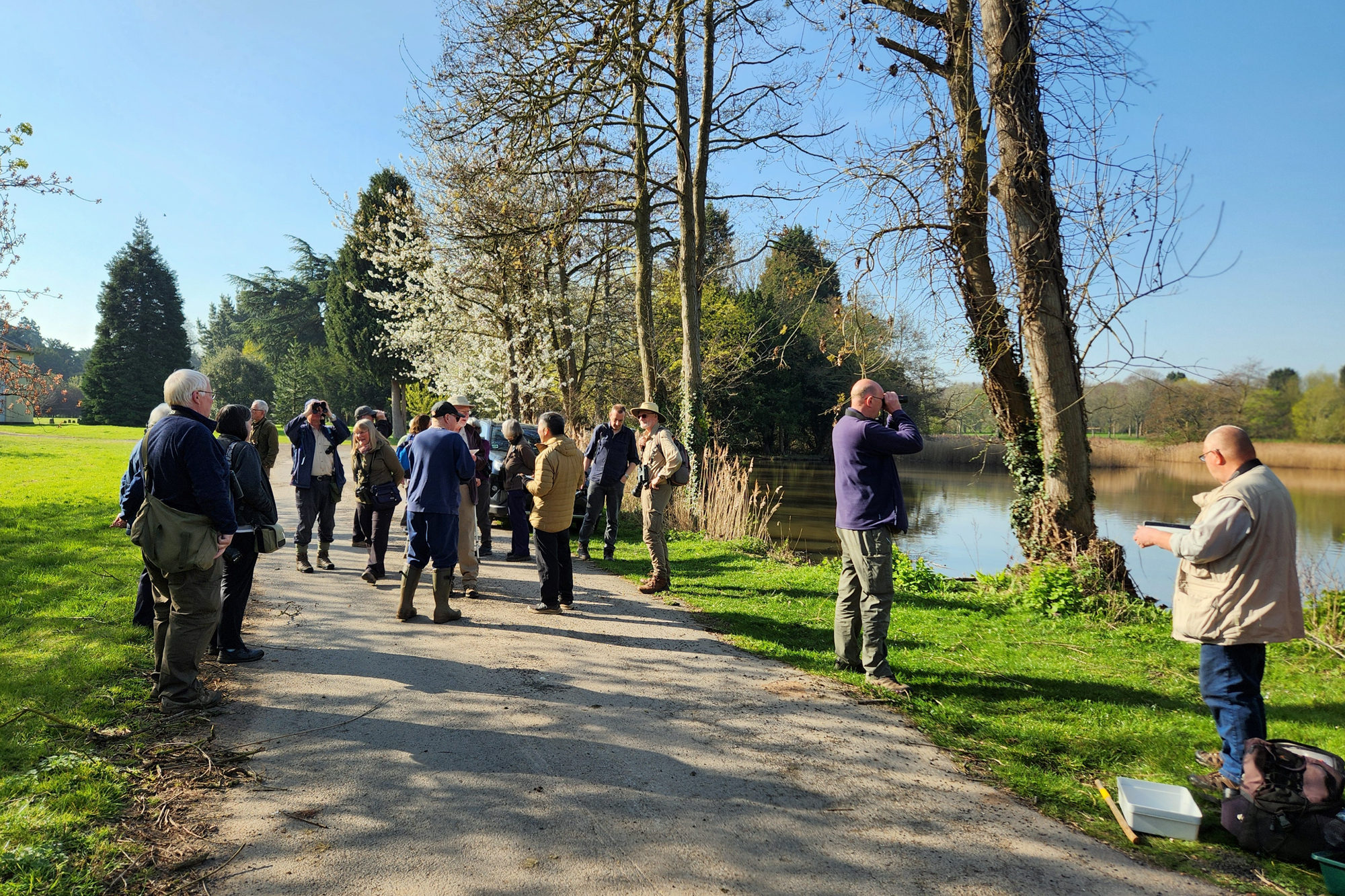
There were about 20 Loughborough Naturalists attending this event; mostly generalists, but also Graham Finch (County Beetle Recorder) and Steve Woodward (County Plant Recorder), both of whom made lists of their specialities. Several members were expert ornithologists, so we were able to collect a good bird list. The generalists pooled information to obtain many other species. Good grid references were difficult to compile as we spent our time in the area of four different 6-figure grid squares i.e. 100 metres by 100 metres. Steve’s records were also intended for the BSBI (Botanical Society of Britain and Ireland) database which records at monad level, i.e. 1 km by 1 km except for anything exceptional. Graham’s records gave grid records for the rare species. Grid references can be seen in the Excel spreadsheets forwarded to Dave Robinson.
Vascular plants: flowering plants and ferns
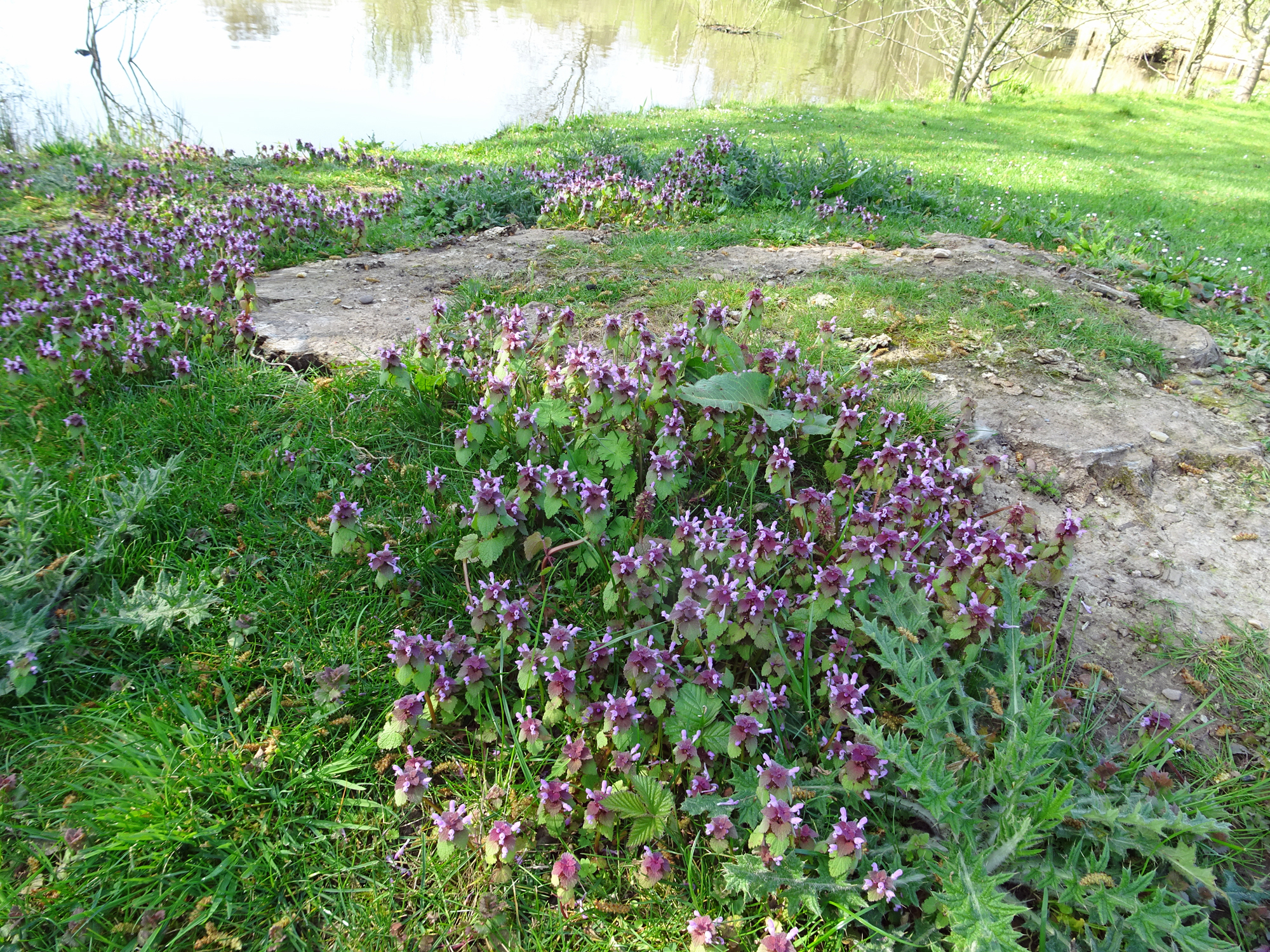
123 species were identified. Some of these, for example the three cedars, have been noted in Steve’s list as planted. A large swathe of Red Dead-nettle near the lake was impressive. This seems to be a very common plant again this year as it was a few years ago. It would be interesting to know why – weather patterns at critical times of the year, changes in pollution?
| Abies alba | European Silver-fir |
| Acer pseudoplatanus | Sycamore |
| Achillea millefolium | Yarrow |
| Aegopodium podagraria | Ground-elder |
| Alisma plantago-aquatica | Water-plantain |
| Alliaria petiolata | Garlic Mustard |
| Alnus glutinosa | Alder |
| Alopecurus pratensis | Meadow Foxtail |
| Angelica sylvestris | Wild Angelica |
| Anthriscus sylvestris | Cow Parsley |
| Aphanes arvensis | Parsley-piert |
| Arabidopsis thaliana | Thale Cress |
| Arctium minus agg. | Lesser Burdock |
| Arum maculatum | Lords-and-Ladies/Cuckoo Pint |
| Bellis perennis | Daisy |
| Betula pendula | Silver Birch |
| Cardamine hirsuta | Hairy Bitter-cress |
| Cardamine pratensis | Cuckooflower |
| Carex hirta | Hairy Sedge |
| Carex pendula | Pendulous Sedge |
| Carex remota | Remote Sedge |
| Carex riparia | Greater Pond-sedge |
| Carpinus betulus | Hornbeam |
| Cedrus atlantica | Atlas Cedar |
| Cedrus deodara | Deodar |
| Cedrus libani | Cedar-of-Lebanon |
| Centaurea nigra agg. | Knapweed |
| Cerastium glomeratum | Sticky Mouse-ear |
| Cirsium arvense | Creeping Thistle |
| Cirsium vulgare | Spear Thistle |
| Crocosmia x crocosmiiflora | Montbretia |
| Cupressus lawsoniana | Lawson’s Cypress |
| Dactylis glomerata | Cock’s-foot |
| Deschampsia cespitosa | Tufted Hair-grass |
| Dipsacus fullonum | Wild Teasel |
| Elymus repens | Common Couch |
| Epilobium hirsutum | Great Willowherb |
| Erodium cicutarium | Common Stork’s-bill |
| Erophila verna s.s. | Common Whitlowgrass |
| Euphorbia peplus | Petty Spurge |
| Fagus sylvatica | Beech |
| Ficaria verna | Lesser Celandine |
| Filipendula ulmaria | Meadowsweet |
| Fraxinus excelsior | Ash |
| Galanthus nivalis | Snowdrop |
| Galium aparine | Cleavers |
| Galium verum | Lady’s Bedstraw |
| Geranium dissectum | Cut-leaved Crane’s-bill |
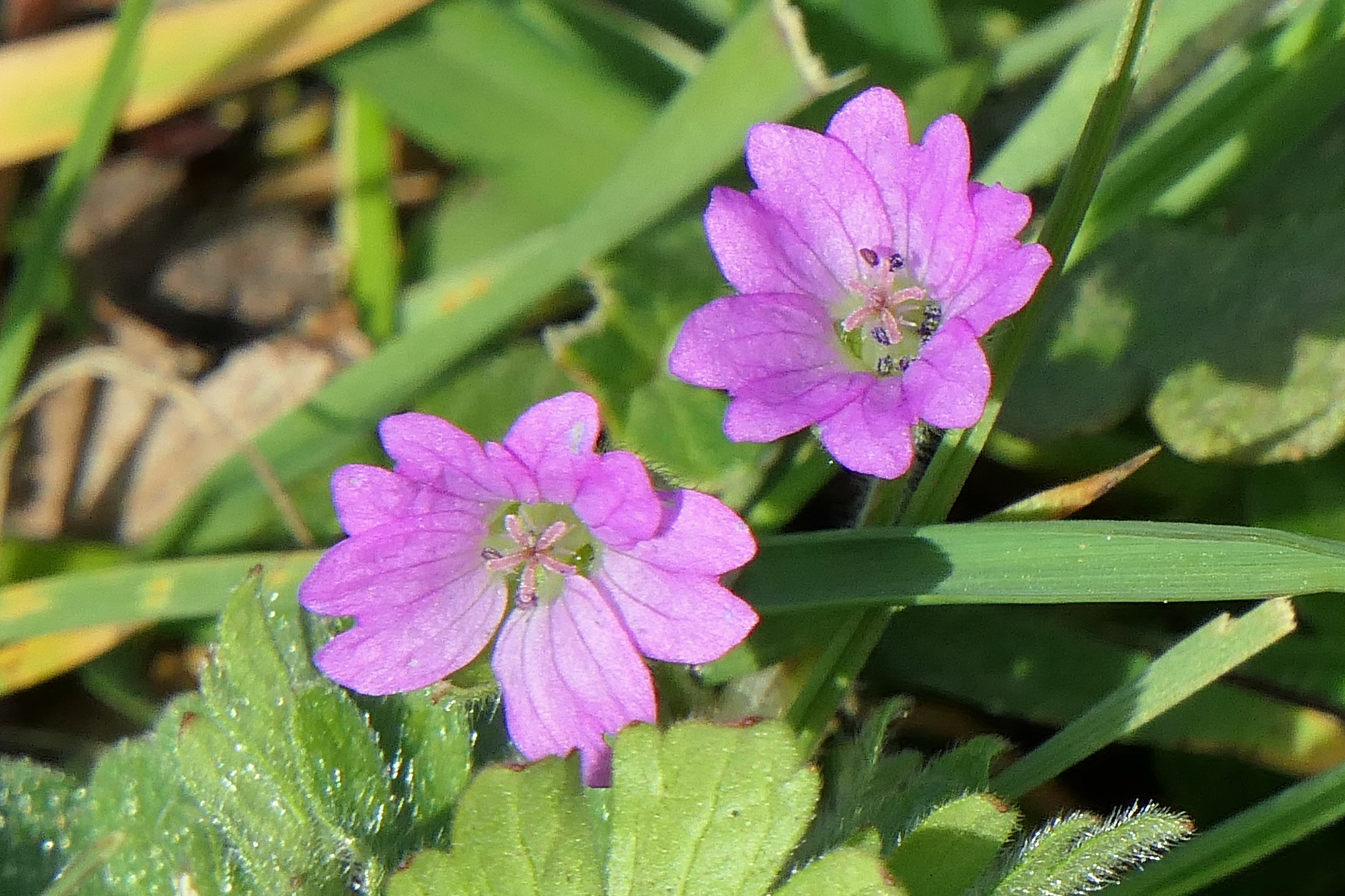
| Geranium molle | Dove’s-foot Crane’s-bill |
| Geranium robertianum | Herb Robert |
| Geum urbanum | Wood Avens/Herb Bennet |
| Glechoma hederacea | Ground-ivy |
| Hedera helix | Ivy |
| Helminthotheca echioides | Bristly Oxtongue |
| Heracleum sphondylium | Hogweed |
| Holcus lanatus | Yorkshire-fog |
| Hyacinthoides non-scripta | Bluebell |
| Ilex aquifolium | Holly |
| Iris pseudacorus | Yellow Iris |
| Jacobaea vulgaris | Common Ragwort |
| Juncus effusus | Soft-rush |
| Juncus inflexus | Hard Rush |
| Lamium album | White Dead-nettle |
| Lamium purpureum | Red Dead-nettle |
| Lolium perenne | Perennial Rye-grass |
| Lotus corniculatus | Common Bird’s-foot-trefoil |
| Luzula campestris | Field Wood-rush |
| Lycopus europaeus | Gipsywort |
| Melissa officinalis | Balm |
| Mercurialis perennis | Dog’s Mercury |
| Myosotis sylvatica | Wood Forget-me-not |
| Narcissus | Daffodil |
| Oxalis corniculata | Procumbent Yellow Sorrel |
| Pentaglottis sempervirens | Green Alkanet |
| Phalaris arundinacea | Reed Canary-grass |
| Phragmites australis | Common Reed |
| Pinus nigra | Pine |
| Pinus sylvestris | Scots Pine |
| Plantago lanceolata | Ribwort Plantain |
| Platanus x hispanica | London Plane |
| Poa annua | Annual Meadow-grass |
| Potentilla anserina | Silverweed |
| Prunella vulgaris | Selfheal |
| Prunus avium | Wild Cherry |
| Prunus lusitanica | Portugal Laurel |
| Quercus cerris | Turkey Oak |
| Quercus ilex | Evergreen Oak |
| Quercus rubra | Red Oak |
| Ranunculus repens | Creeping Buttercup |
| Rubus fruticosus agg. | Bramble agg. |
| Rumex acetosa | Common Sorrel |
| Rumex obtusifolius | Broad-leaved Dock |
| Rumex sanguineus | Wood Dock |
| Sagina procumbens | Procumbent Pearlwort |
| Salix alba x babylonica = Salix x sepulcralis agg. | Weeping Willow |
| Salix x fragilis | Hybrid Crack-willow |
| Salix x sepulcralis | Weeping Willow |
| Sambucus nigra | Elder |
| Senecio vulgaris | Groundsel |
| Sequoiadendron giganteum | Wellingtonia |
| Silene dioica | Red Campion |
| Solanum dulcamara | Bittersweet |
| Sorbus aucuparia | Rowan |
| Stachys sylvatica | Hedge Woundwort |
| Stellaria media | Common Chickweed |
| Symphytum grandiflorum | Creeping Comfrey |
| Taraxacum agg. | Dandelion agg. |
| Taxus baccata | Yew |
| Trifolium repens | White Clover |
| Typha latifolia | Bulrush |
| Urtica dioica | Common Nettle |
| Veronica arvensis | Wall Speedwell |
| Veronica chamaedrys | Germander Speedwell |
| Veronica hederifolia | Ivy-leaved Speedwell |
| Veronica persica | Common Field-speedwell |
| Vicia sativa | Common Vetch |
| Viscum album | Mistletoe |
Bryophytes: mosses and liverworts
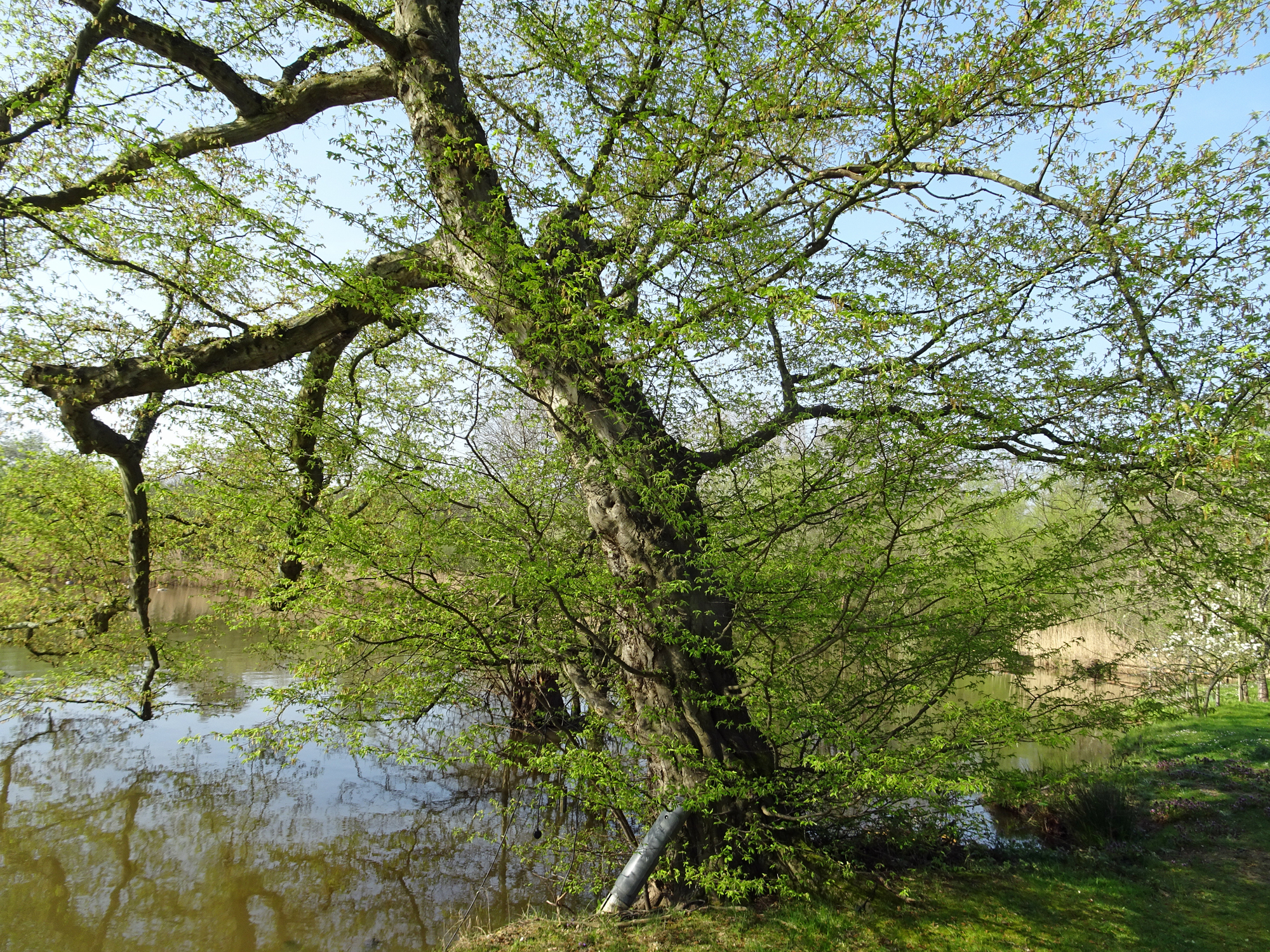
Only two were recorded during the limited time we spent there. A more specialised visit to record bryophytes would be useful
| Kindbergia praelonga | Common Feather-moss | Present | SK5019 | Steve Woodward |
| Rhytidiadelphus squarrosus | Springy Turf-moss | Present | SK4920 | Steve Woodward |
Fungi
A limited number were found – a longer repeat visit in Autumn would no doubt yield many more.
| Daldinia concentrica | King Alfred’s Cakes | |
| Hypoxylon fragiforme | Beech Woodwart | |
| Marasmius oreade | Fairy ring champignon | Early grassland fungus |
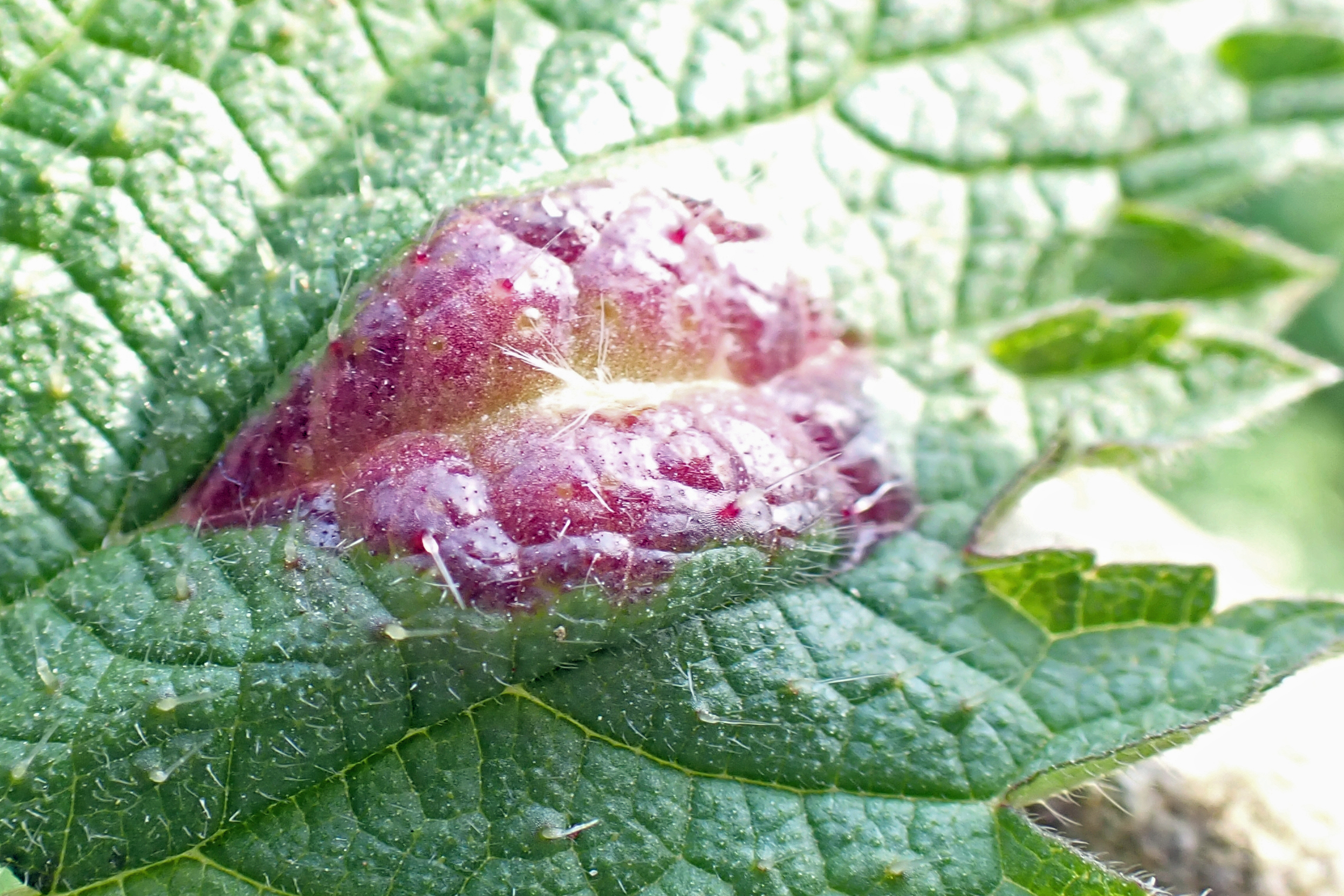
| Melampsora euphorbiae | Spurge Rust | |
| Puccinia sessilis | Arum Rust | |
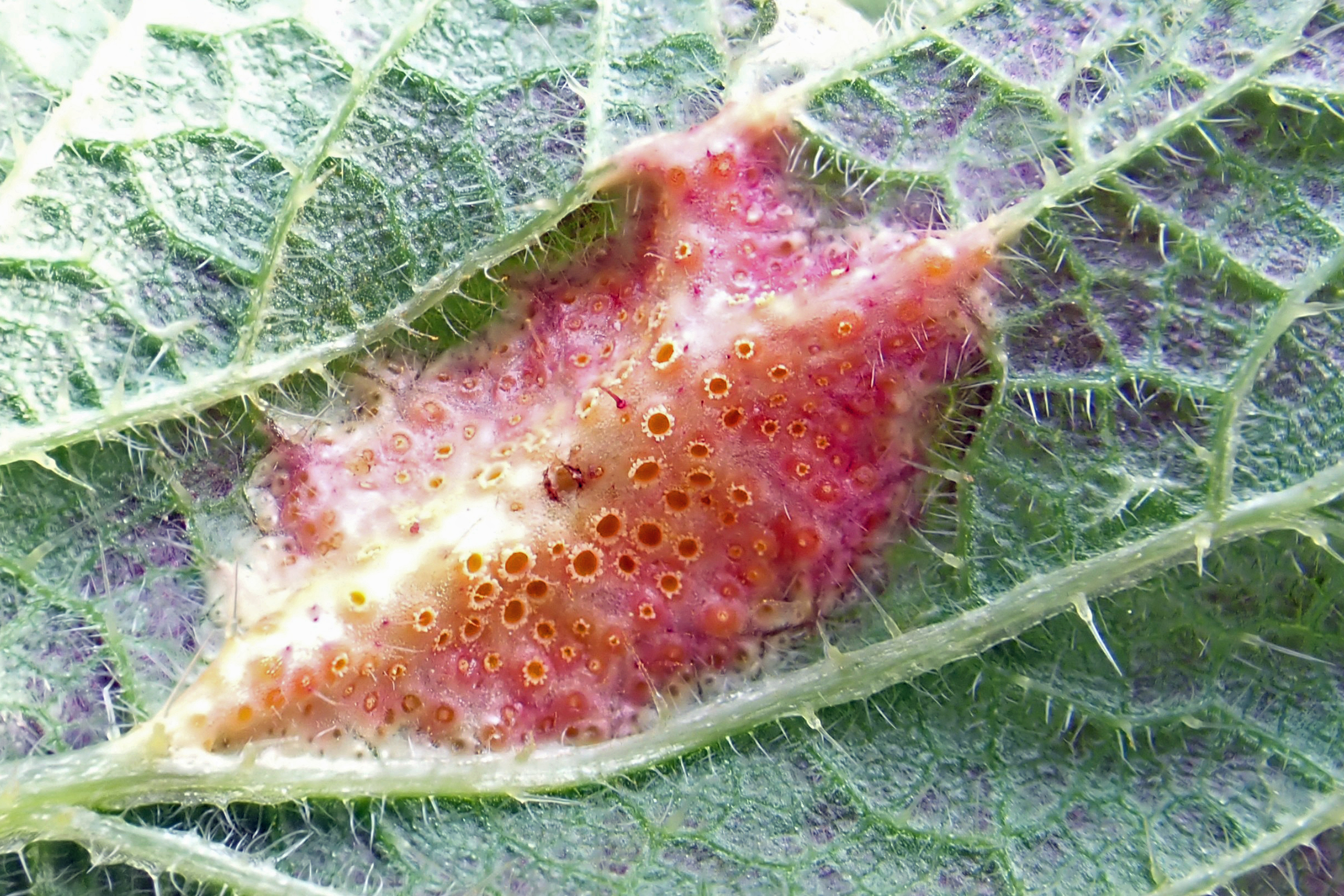
| Puccinia urticata | Nettle Rust |
Lichens
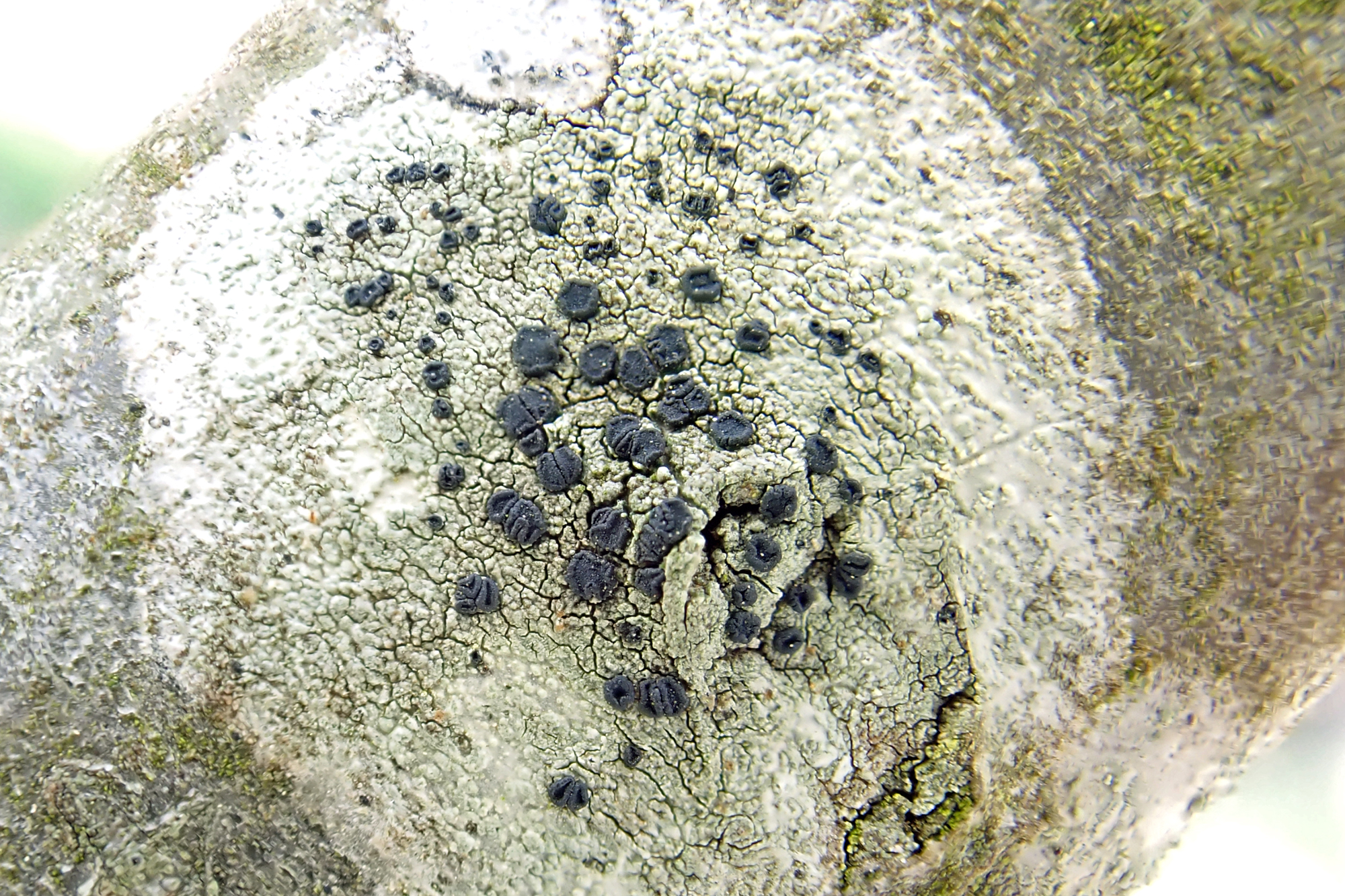
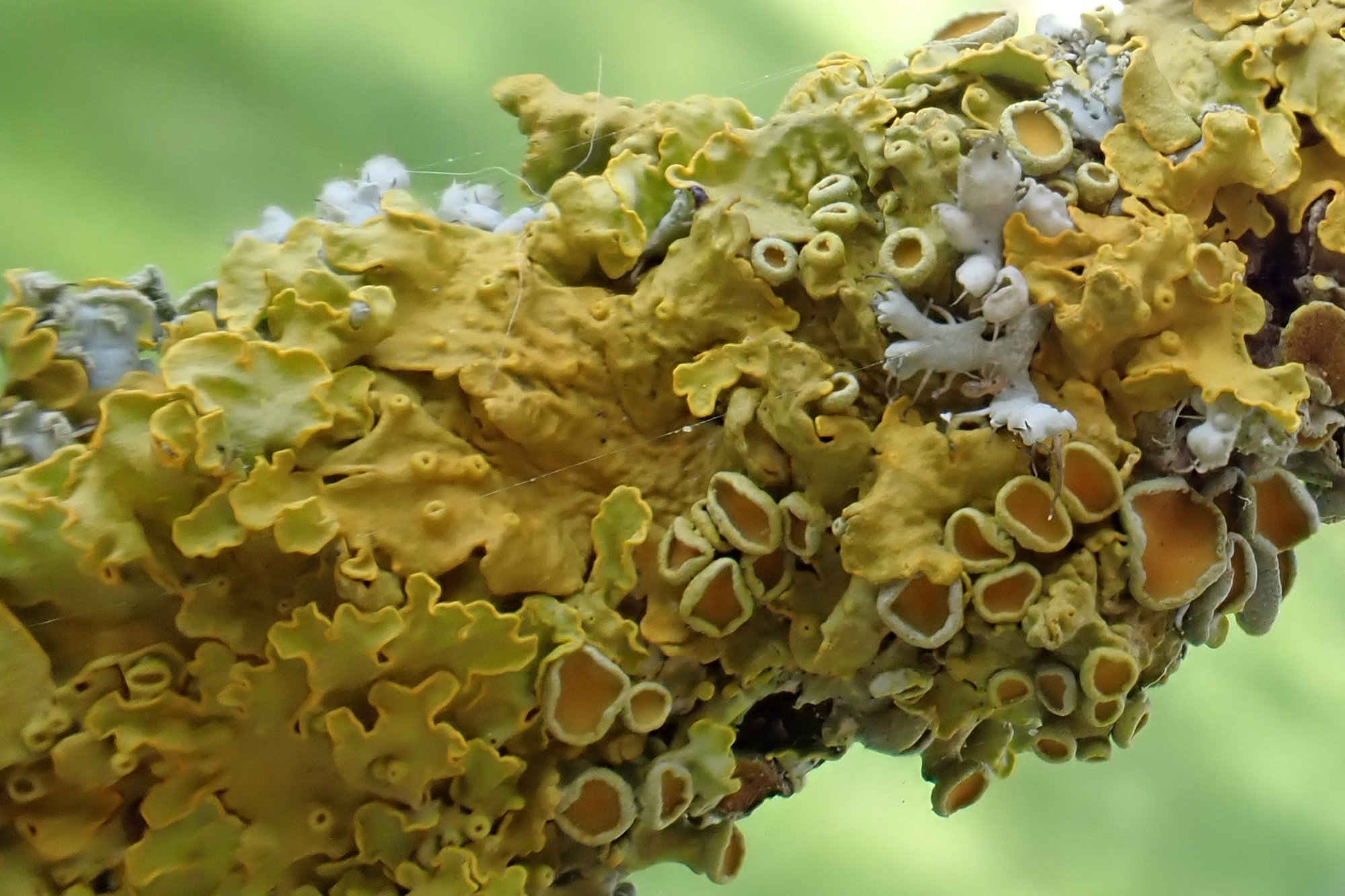
Note that these species have not yet been verified. Those marked with asterisks * are considered neutrophiles, lichens that like nitrogen (especially ammonia) and are becoming more common due to changes in air composition in recent years. Nitrogen in the form of basic ammonia emanates from silage and animal husbandry, while acidic nitrogen oxides come from motor vehicle exhausts.
| Lecanora chlarotera s. lat. | Brown rim-lichen |
| Lecidella elaeochroma | Grey-green disc lichen |
| Phaeophyscia orbicularis | An indicator of nitrogen enrichment.* |
| Physcia adscendens | Pale grey foliose lichen composed of narrow, flattened branches where the lobe ends become inflated and hood-shaped. * |
| Physcia tenella | Very similar to P. adscendens and grows in similar places but this species has lobe ends that split and turn back to reveal coarse cream-coloured soredia.* |
| Xanthoria parietina | Common Orange Lichen * |
Mammals
| Badger | digging signs |
| Grey squirrel | 1 alive, 1 dead in lake |
| Muntjac |
Birds
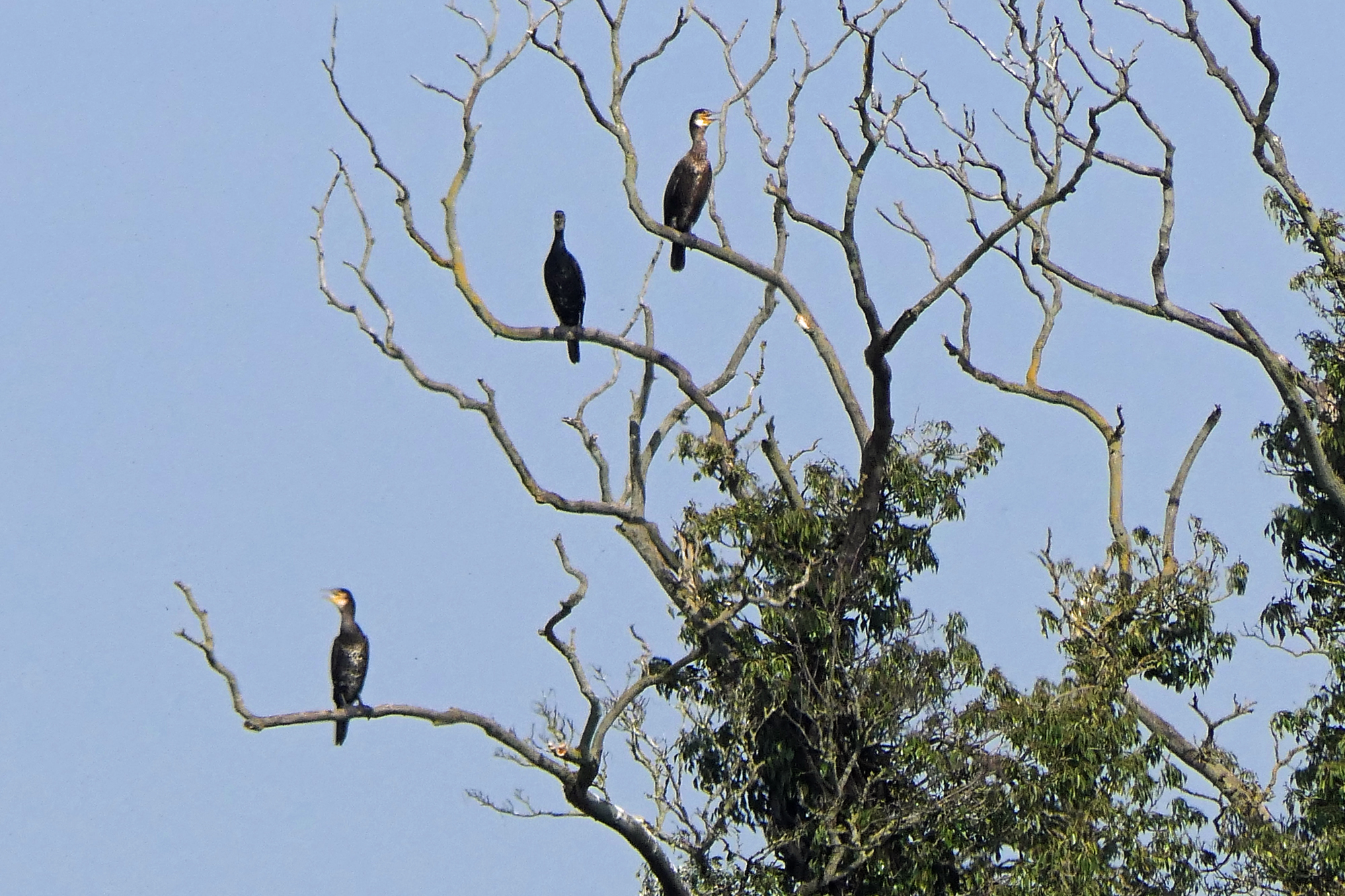
34 species of birds were recorded, some visually and some by sound and several of them by more than one observer.
| Blackbird | Goldcrest | Jackdaw | Song Thrush |
| Blackcap | Goldfinch | Jay | Sparrowhawk |
| Blue Tit | Great Spotted Woodpecker | Little Grebe | Stock Dove |
| Buzzard | Great Tit | Magpie | Swallow |
| Canada Goose | Green Woodpecker | Mallard | Treecreeper |
| Carrion Crow | Greenfinch | Red Kite | Wood Pigeon |
| Chiffchaff | Grey Heron | Robin | Wren |
| Coot | Grey Wagtail | Sand Martin | |
| Cormorant | Greylag Goose | Skylark |
Fish and Amphibians
Three fish were found, all dead by the side of the small pond. Expert fishermen were amongst the group who could recognise them as Common Bream and Roach as below, differences depended on the appearance of the scales and the fact that the roach were very narrow in profile from above. It was suggested that they had been caught by the cormorants but left uneaten. All the fish were small, about 4-6 inches long.
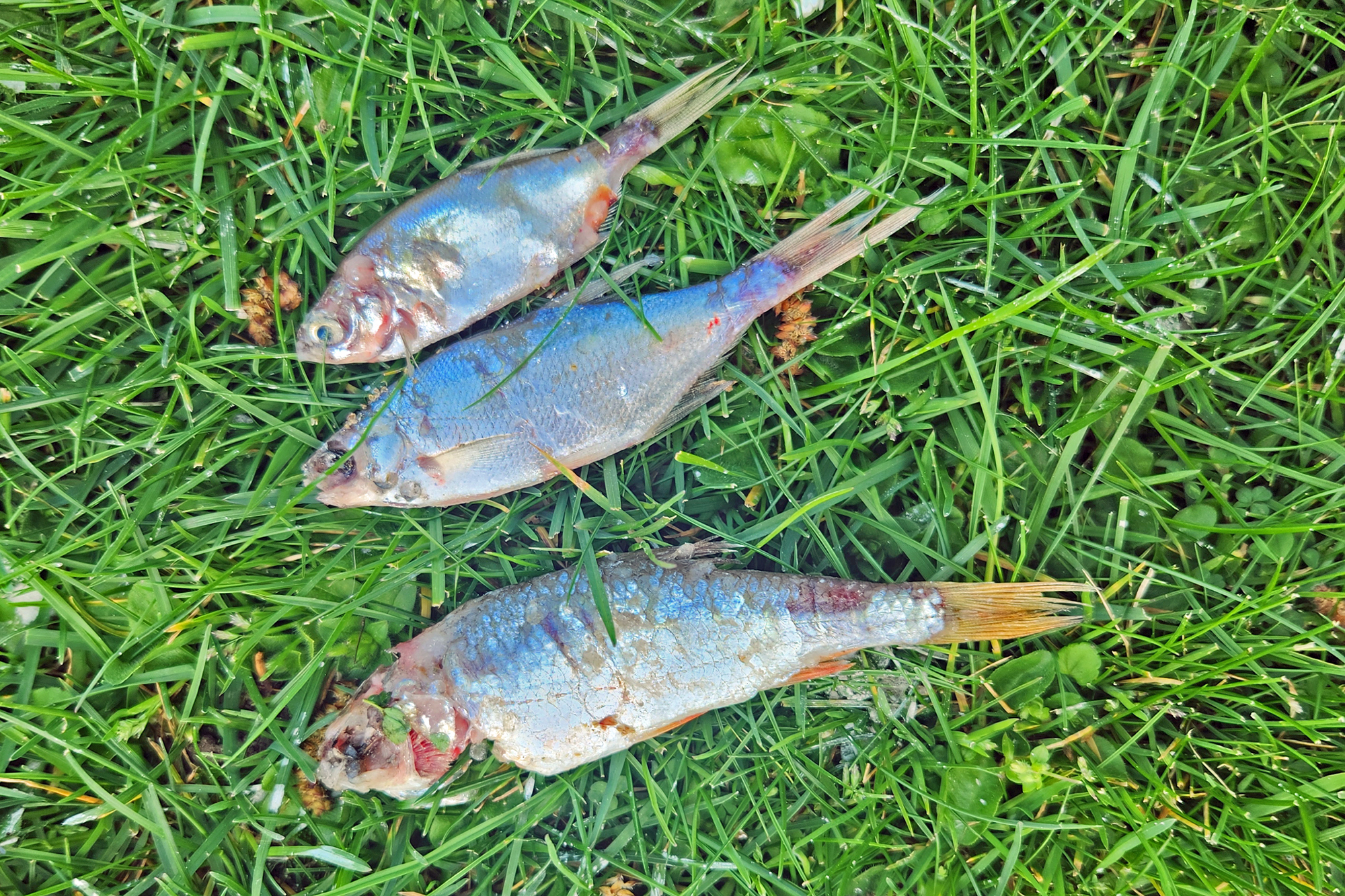
| Abramis brama | Common Bream | 1 | SK500200 |
| Rutilus rutilus | Roach | 2 | SK500200 |
Just one toad was found under a log. Surprisingly no frog or toad spawn was noticed.
Orthoptera: Grasshoppers and allies and earwigs.
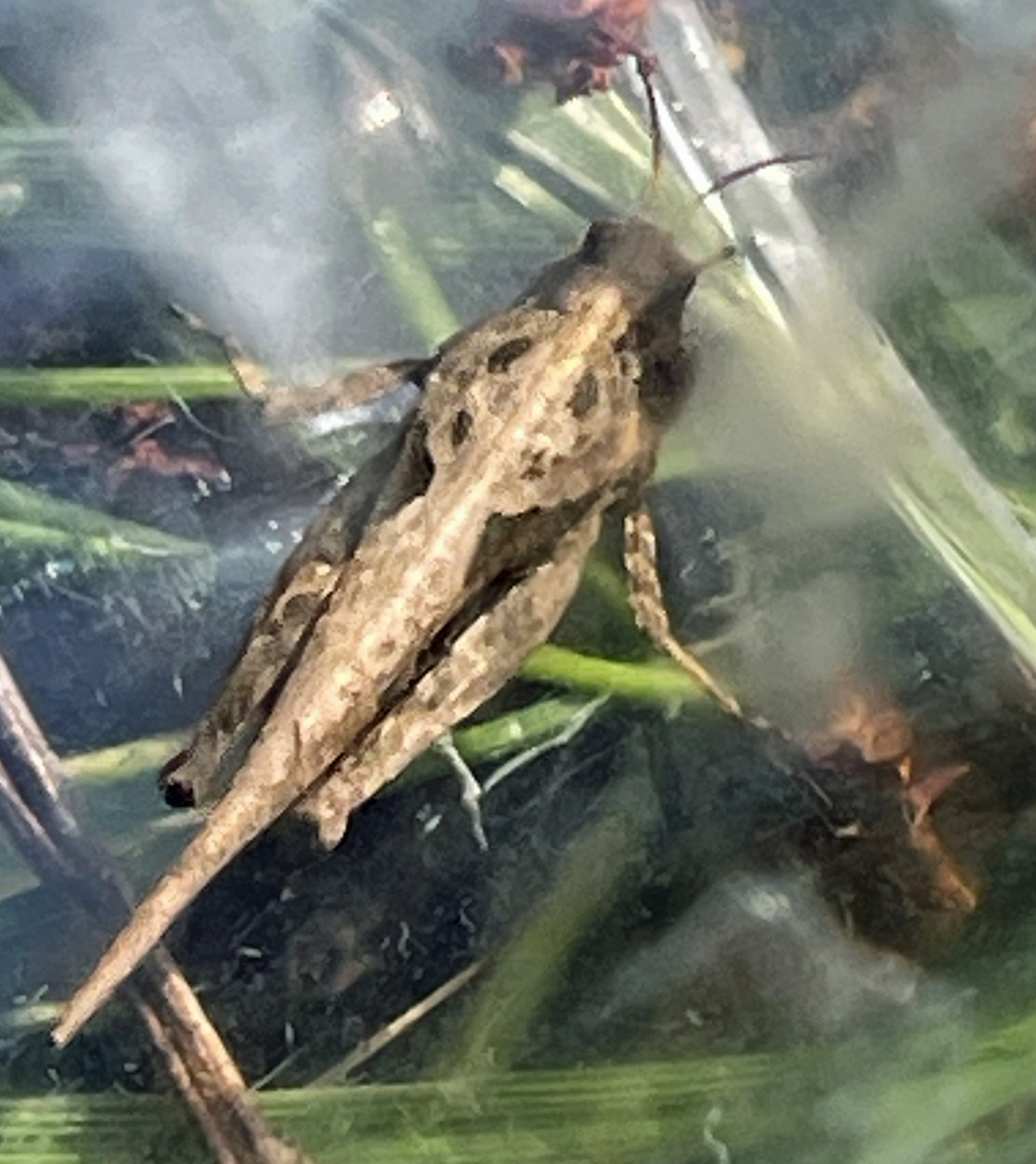
Just one species was found: Tetrix subulata – Slender Ground-hopper. Several individuals were seen jumping around in long grass at the base of a tree near the lake. One was captured to identify and photograph. Sometimes grasshoppers will keep still on the hand after removing from a pot, but this one wouldn’t so the photographs are of poor quality through the pot.
Bugs: Hemiptera
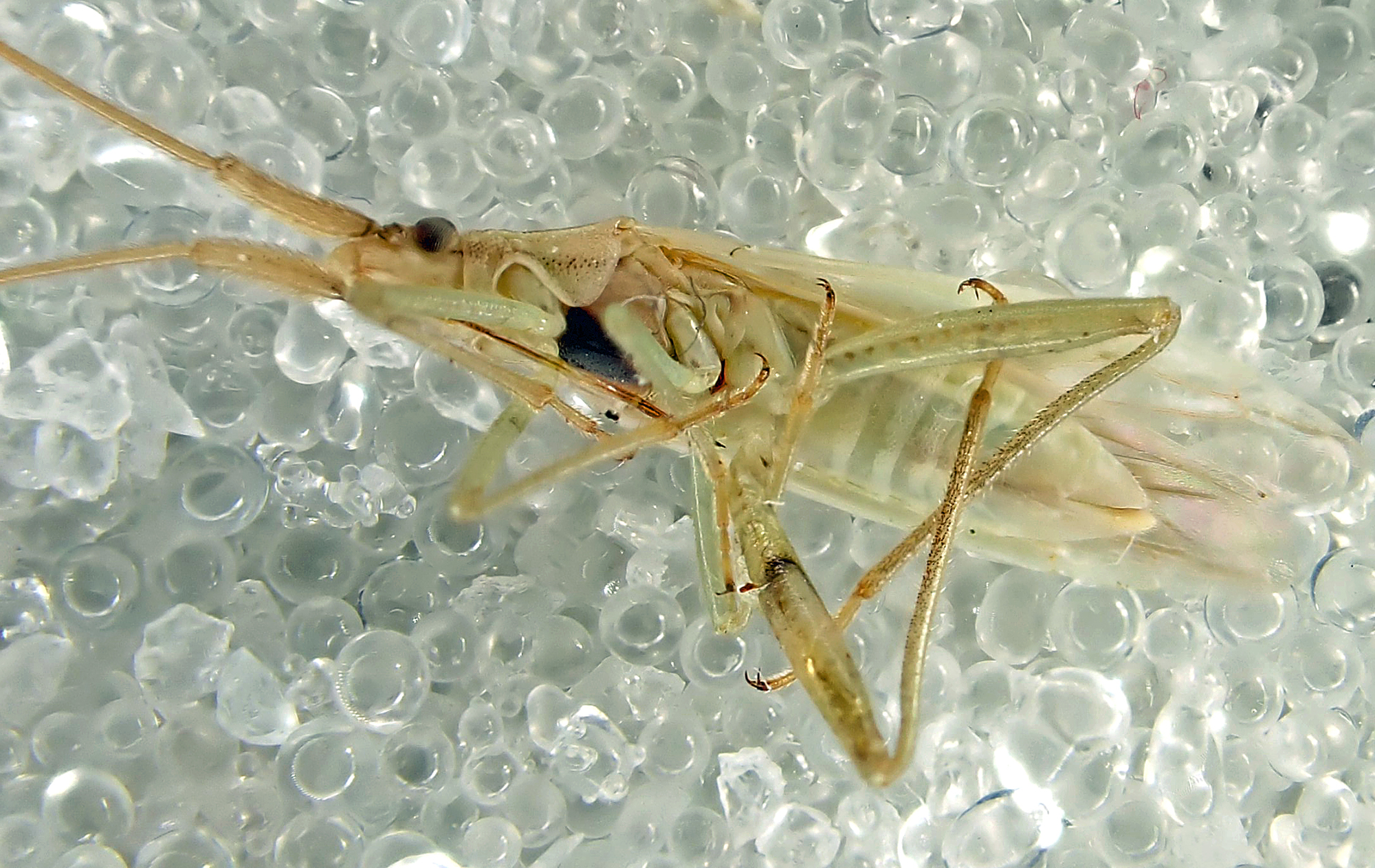
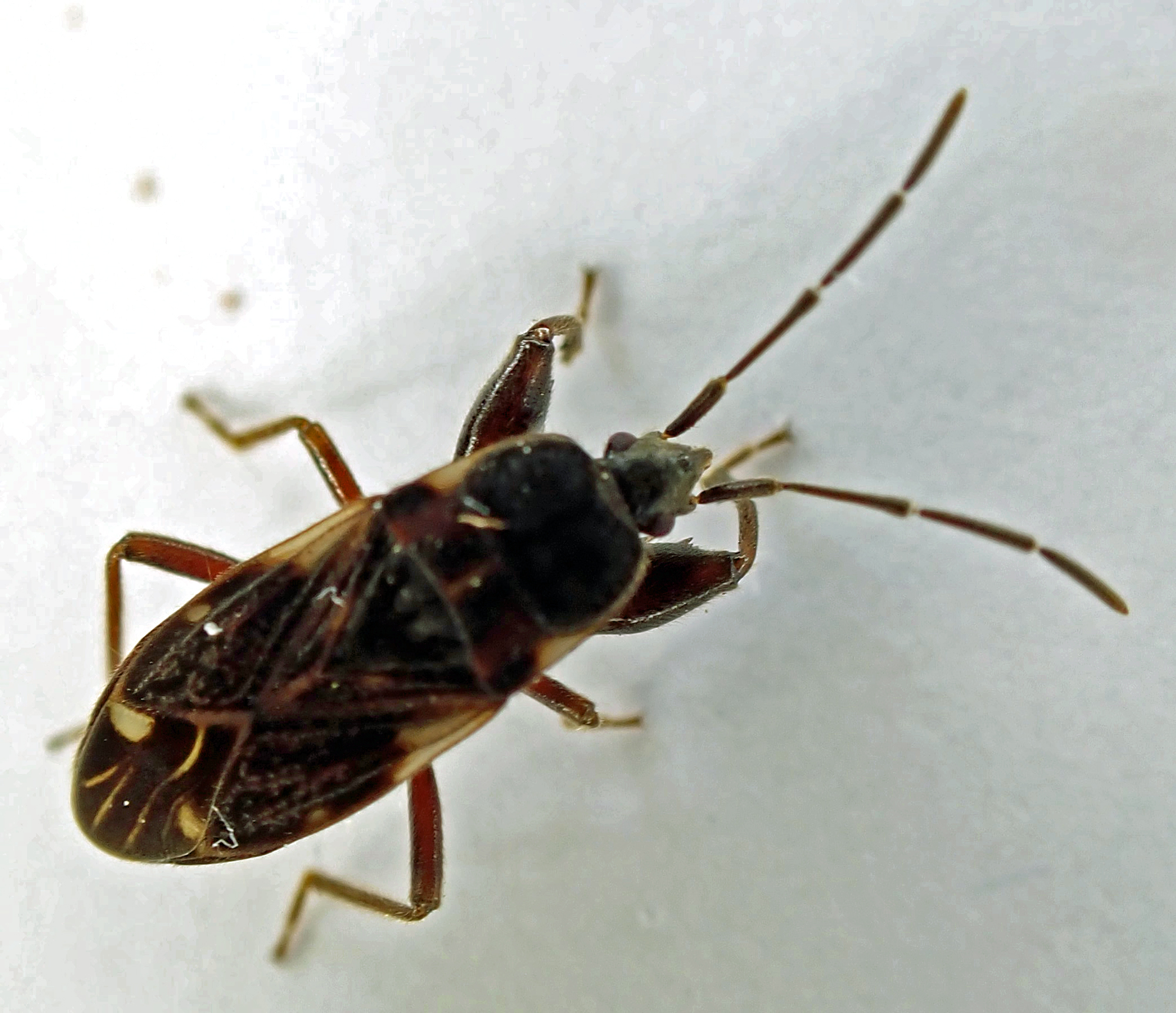
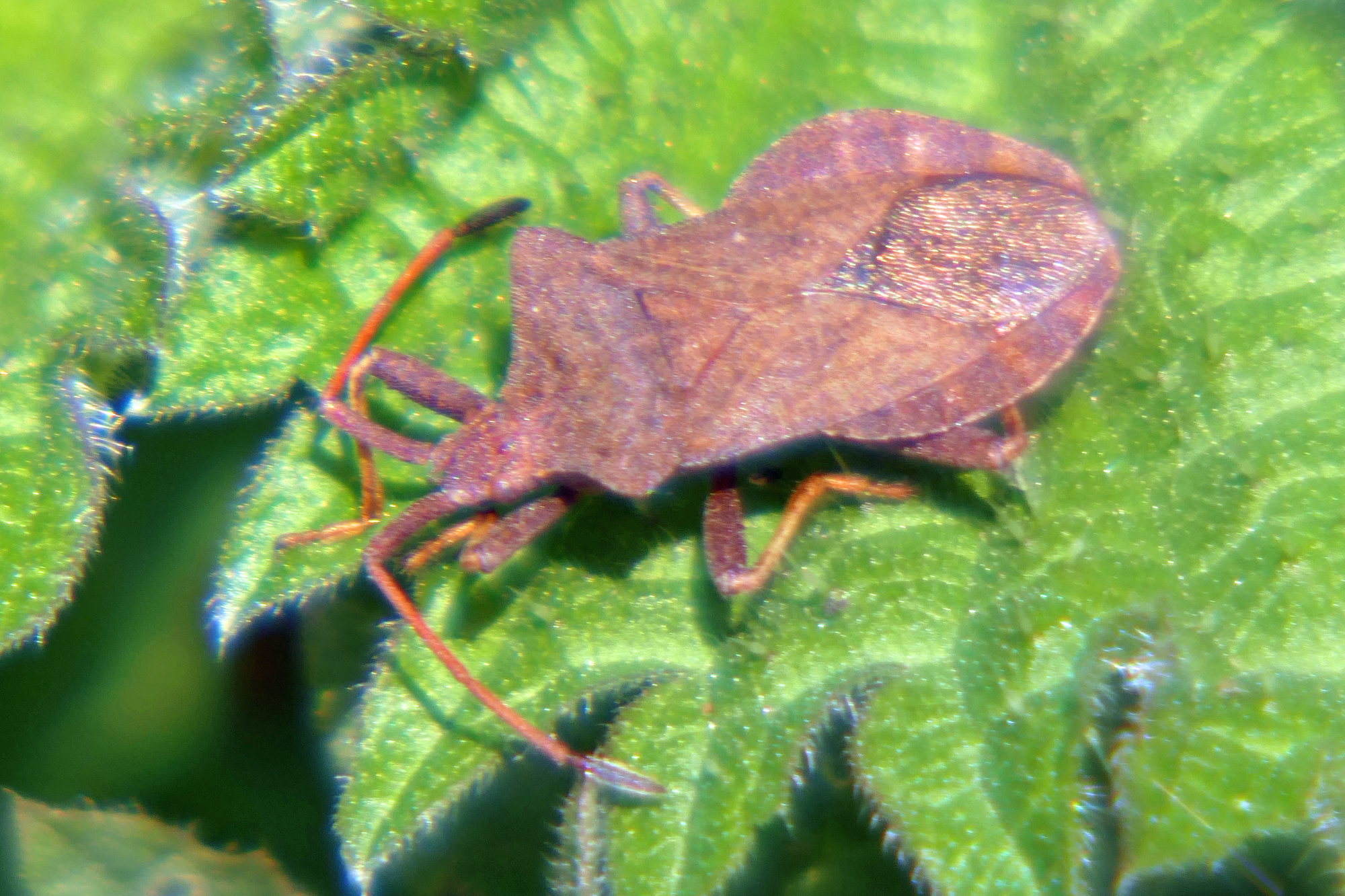
Four species of bugs were found, it being too early in the season for many species. It would be good to visit again in the summer to search for a greater variety of species.
| Scientific Name | Common Name | Number of Records on NatureSpot | First Record on NatureSpot | Comments |
| Coreus marginatus | Dock Bug | 1184 | 2008 | Common and widespread in southern Britain and Common in Leicestershire and Rutland. |
| Corizus hyoscyami | Cinnamon Bug | 269 | 2012 | Formerly a southern coastal species now extending its range northwards. |
| Eremocoris podagricus | a ground bug | 15 | 2015 | Regarded as uncommon but may be under-recorded as needs detailed microscopic examination |
| Stenodema laevigata | a mirid elongate grass bug | 140 | 2008 | Several people found several individuals in long grass |
Coleoptera: Beetles
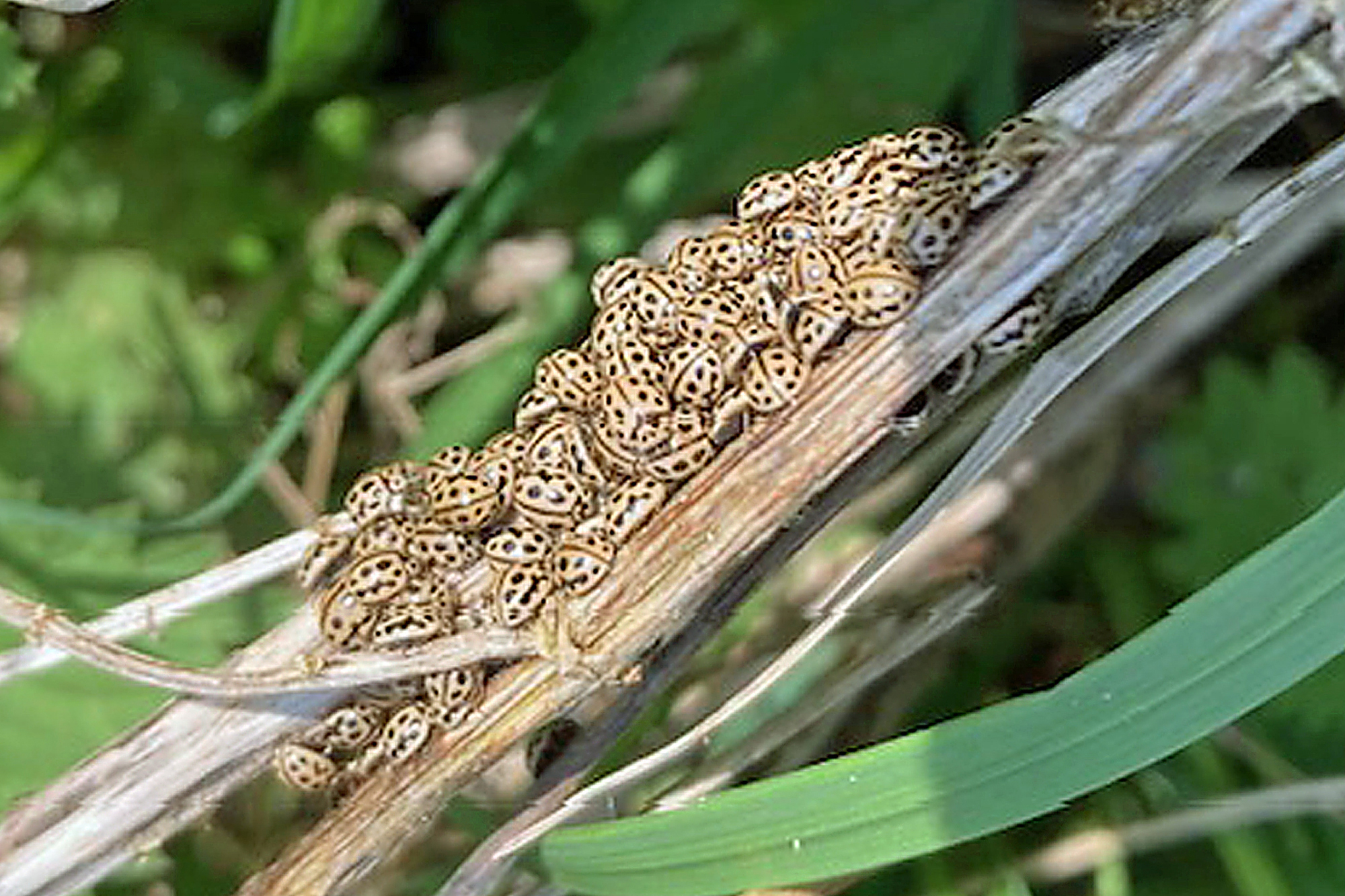
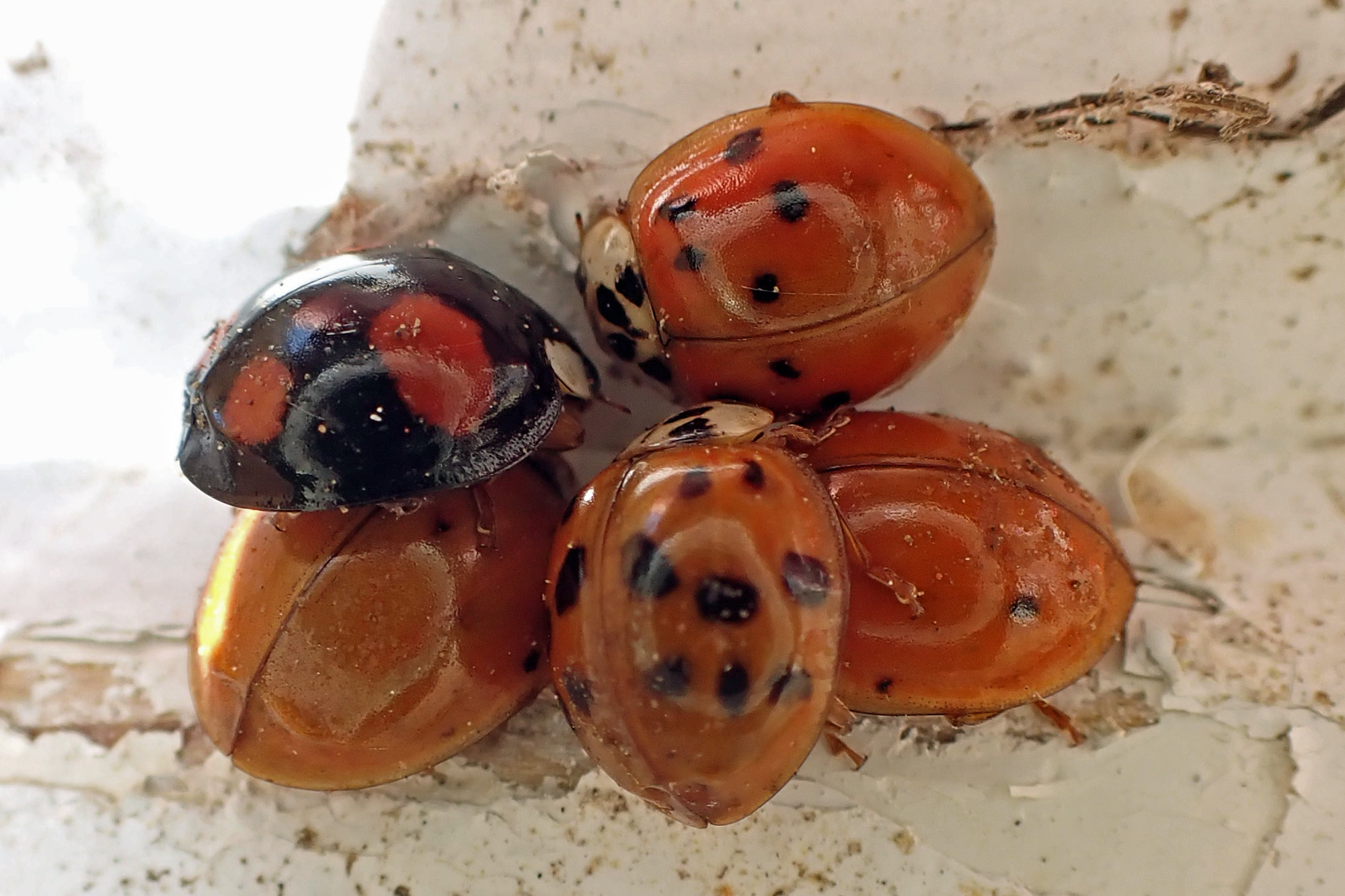
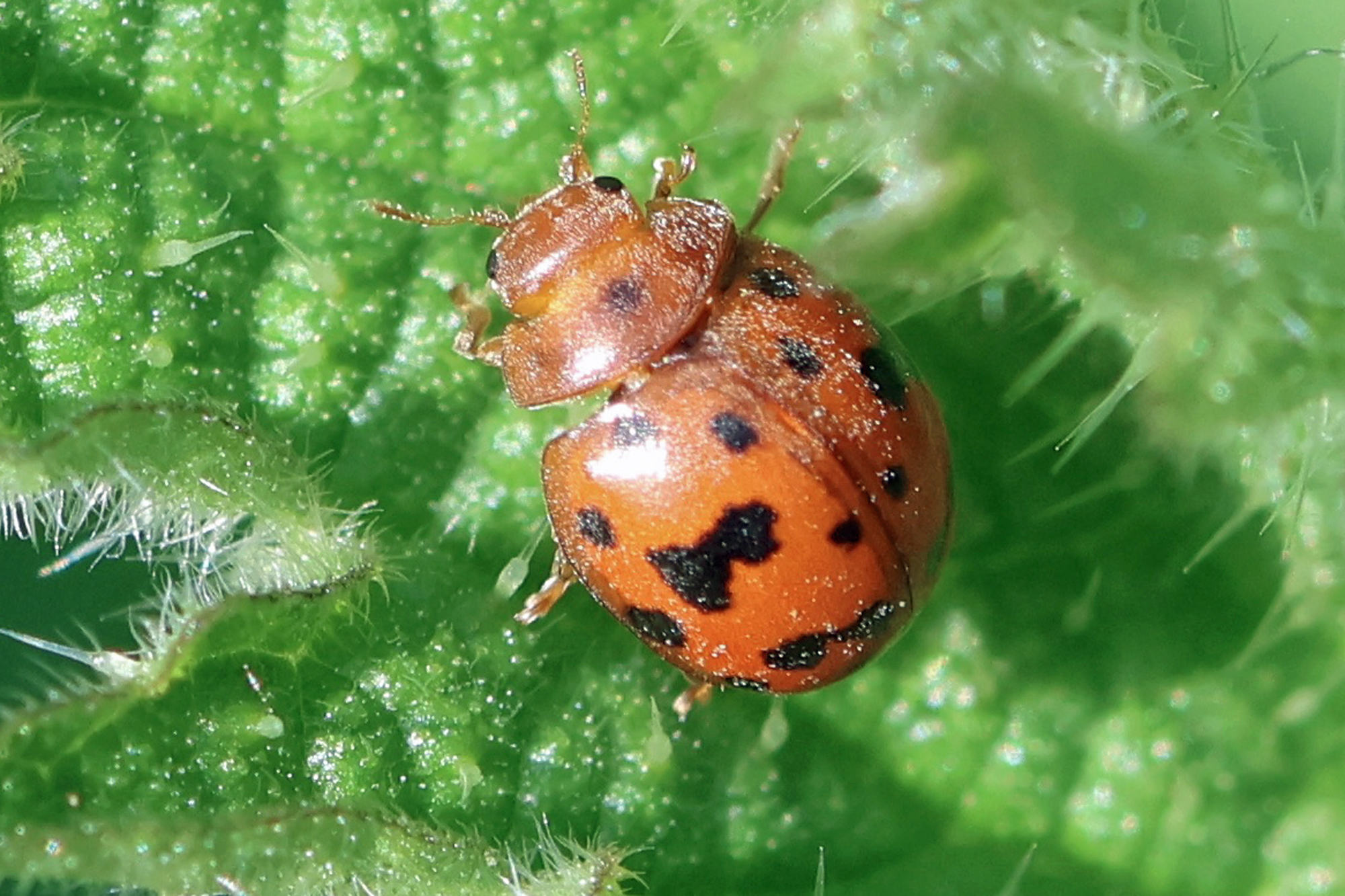
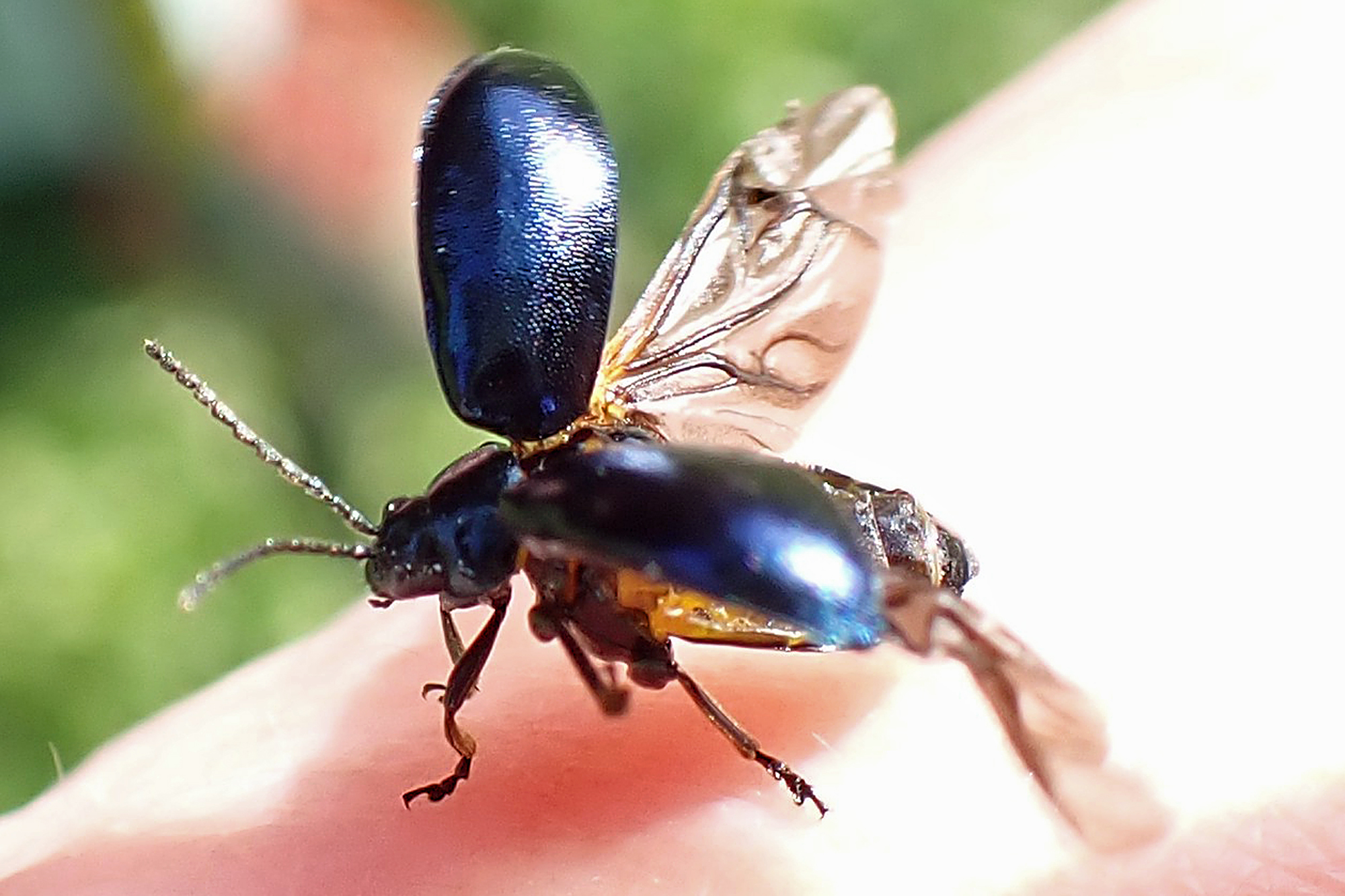
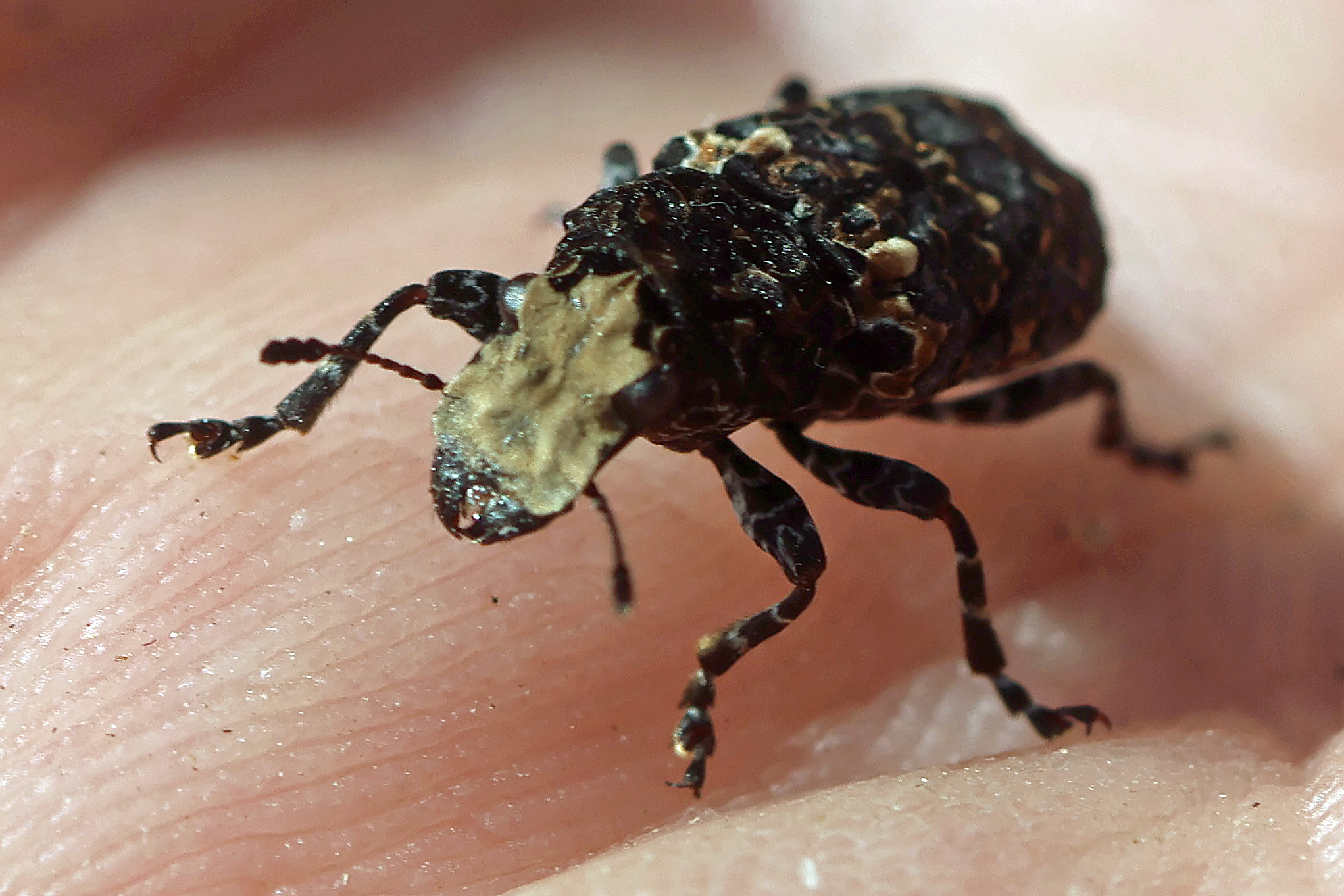
The list compiled by our generalist naturalists is shown first. Graham’s list is shown next and also attached as an Excel file. Numerous numbers and types of Ladybirds were found by many members, presumably because many of them can be easily spotted and identified in the field. Graham found some of his species by intensive searching of shrubs etc by beating into a white tray. It is probable that many of the species found by Graham needed detailed examination.
| Adalia bipunctata | 2-spot Ladybird | individuals |
| Coccinella septempunctata | 7-spot Ladybird | individuals |
| Propylea quattuordecimpunctata | 14-spot Ladybird | individuals |
| Tytthaspis sedecimpunctata | 16-spot Ladybird | Individuals and a group of 20 overwintering |
| Subcoccinella vigintiquattuorpunctata | 24-spot Ladybird | individuals |
| Harmonia axyridis | Harlequin Ladybird | Individuals and a group of 46 hibernating on building wall |
| Exochomus quadripustulatus | Pine Ladybird | individuals |
| Agelastica alni | Alder Leaf Beetle | Found by 2 members |
| Taxon | Vernacular | National Status | VC55 records |
| Bembidion quadrimaculatum | |||
| Pterostichus madidus | |||
| Paradromius linearis | |||
| Metopsia clypeata | 45 | ||
| Bolitochara obliqua | 20 | ||
| Philonthus tenuicornis | 32 | ||
| Odeles marginata | 14 | ||
| Agriotes acuminatus | |||
| Agriotes sputator | |||
| Diplocoelus fagi | Nb | 3 | |
| Stilbus testaceus | |||
| Meligethes ovatus | 1 | ||
| Coccidula rufa | |||
| Coccidula scutellata | |||
| Rhyzobius litura | |||
| Rhyzobius lophanthae | 9 | ||
| Scymnus haemorrhoidalis | 24 | ||
| Stethorus pusillus | 9 | ||
| Exochomus quadripustulatus | Pine Ladybird | ||
| Adalia bipunctata | 2-spot Ladybird | ||
| Coccinella septempunctata | 7-spot Ladybird | ||
| Harmonia axyridis | Harlequin Ladybird | ||
| Propylea quattuordecimpunctata | 14-spot Ladybird | ||
| Tytthaspis sedecimpunctata | 16-spot Ladybird | ||
| Subcoccinella vigintiquattuorpunctata | 24-spot Ladybird | ||
| Orchesia minor | Nb | 23 | |
| Phaedon tumidulus | Celery Leaf Beetle | ||
| Agelastica alni | RDBK | ||
| Crepidodera aurata | |||
| Crepidodera aurea | |||
| Platyrhinus resinosus | Cramp-ball Fungus Weevil | Nb | |
| Isochnus sequensi | RDBK | ||
| Ceutorhynchus pallidactylus | Cabbage Stem Weevil | ||
| Nedyus quadrimaculatus | Small Nettle Weevil | ||
| Phyllobius argentatus | Silver-green Leaf Weevil |
Diptera: flies
| Bibio marci | St Mark’s Fly | Sara Botterell, Kate Moore | A large hairy black fly, more than 1 cm long, which flies slowly with long dangling legs |
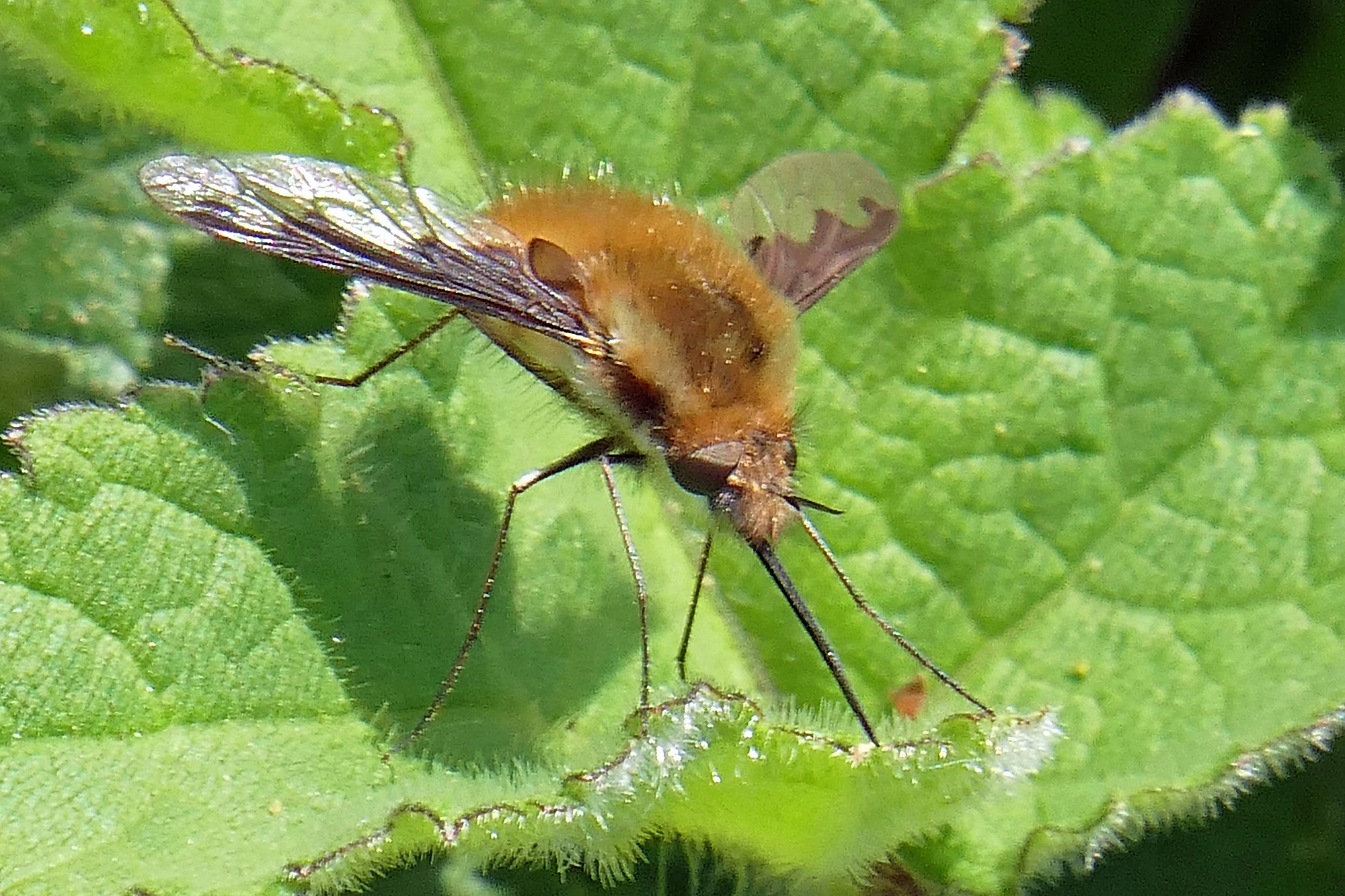
| Bombylius major | Dark-edged Bee-fly | Many seen and photographed by several members | The female lays her eggs near the nests of usually solitary bees, and the parasitic larvae then invade the nests to feed on the bee larvae |
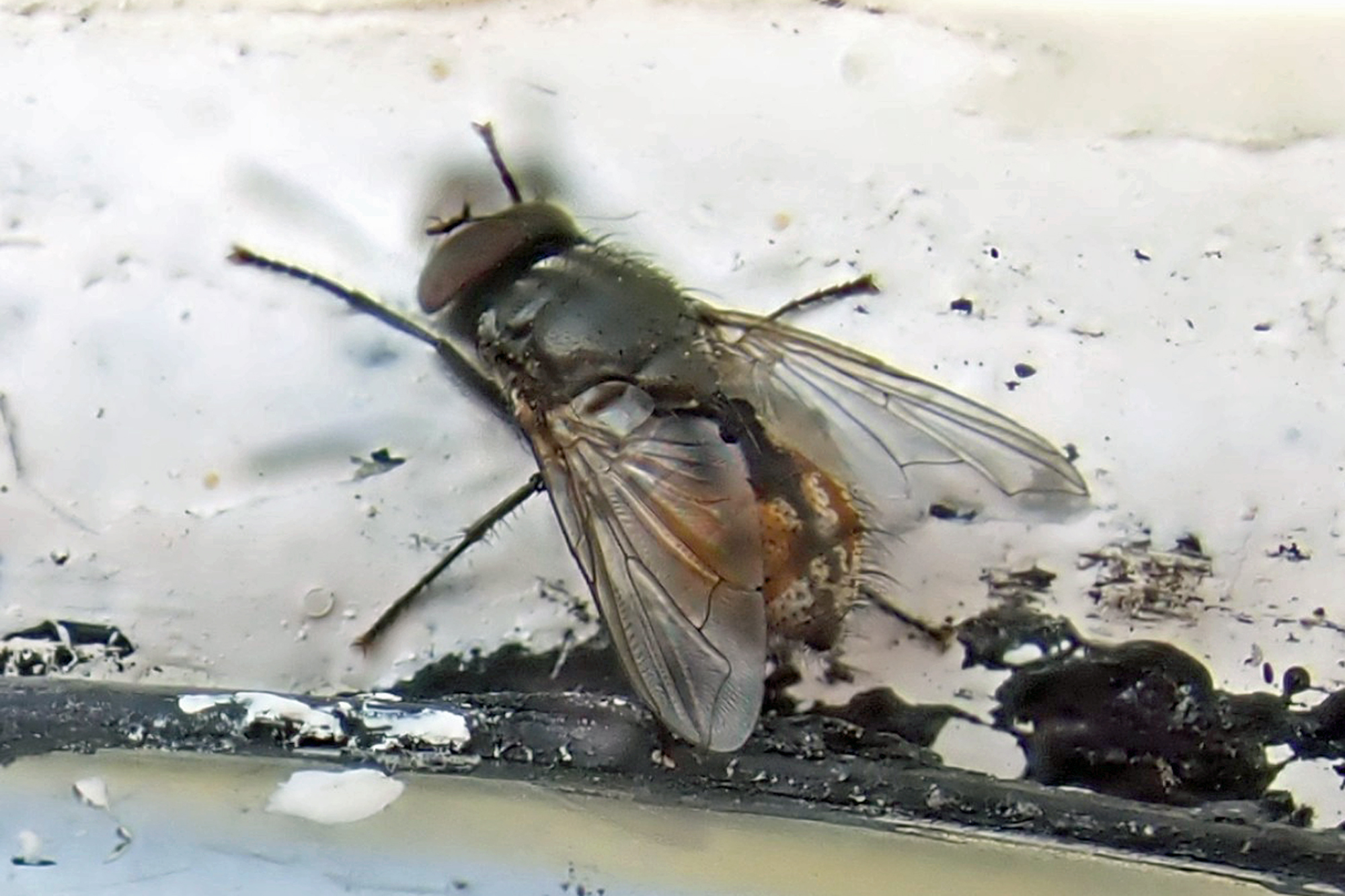
| Musca autumnalis | Face Fly | Mike Higgott and Hazel Graves | About 20 seen on white car top. A Muscid or House Fly. Called a Fae Fly because they often land on the faces of cattle, and feed on tears, sweat and blood from the bites of other flies. They also feed on nectar on flowers and can be found simply sunning themselves as is the case here. |
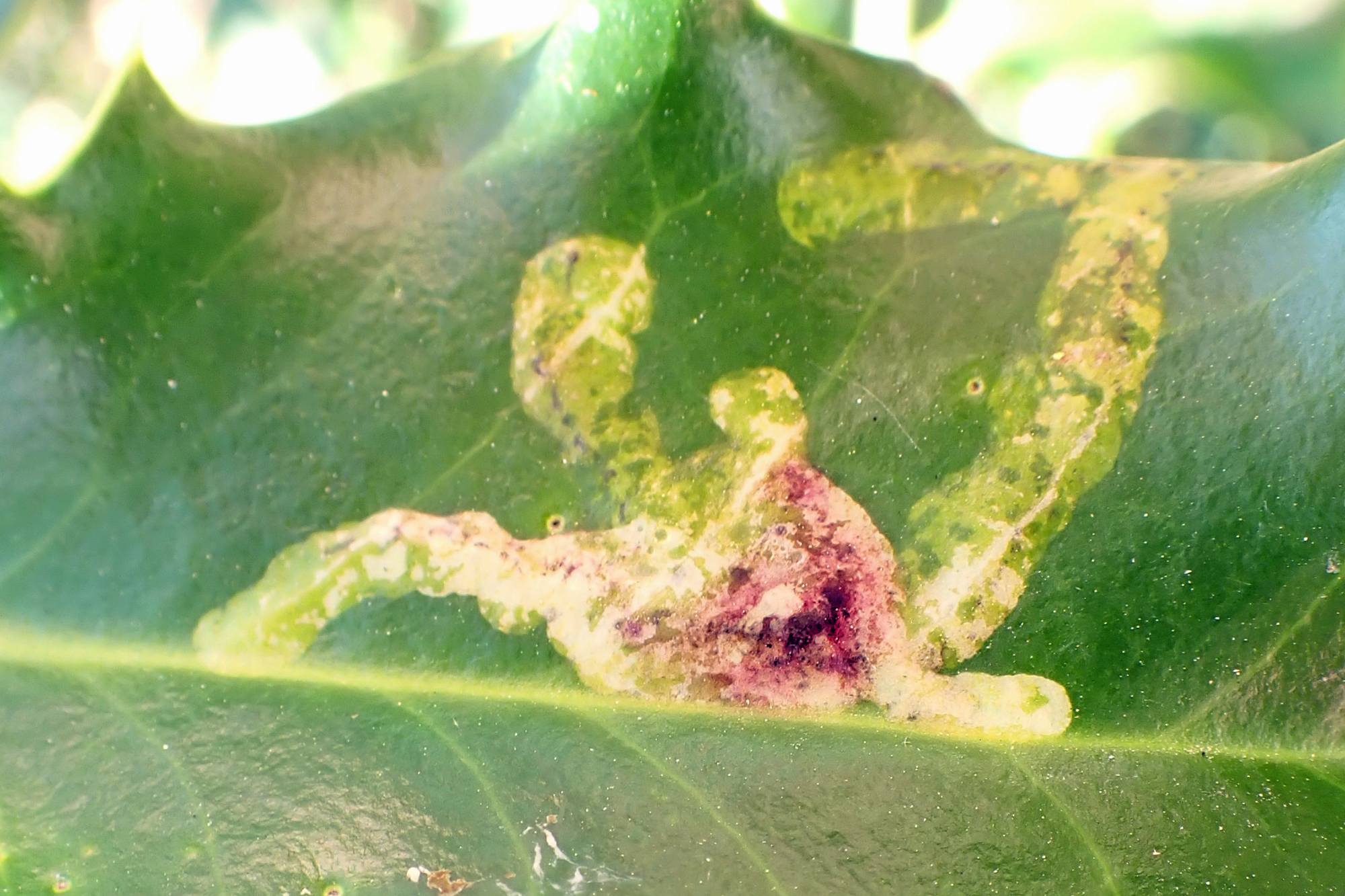
| Phytomyza ilicis | Holly Leaf Fly Miner | Hazel Graves & Mike Higgott | Leaf mine on Holly. Very common |
| Platycheirus albimanus | White-footed Hoverfly | Mike Higgott | |
| Pollenia sp. | A Calliphorid or a Blow-fly | Mike Higgott | Adults are commonly shiny with metallic colouring, often with blue, green, or black. Many species lay eggs on meat or carrion and they get their old English name from meat being ‘blown’ with maggots. |
| Syrphus sp. | a hoverfly | Mike Higgott | |
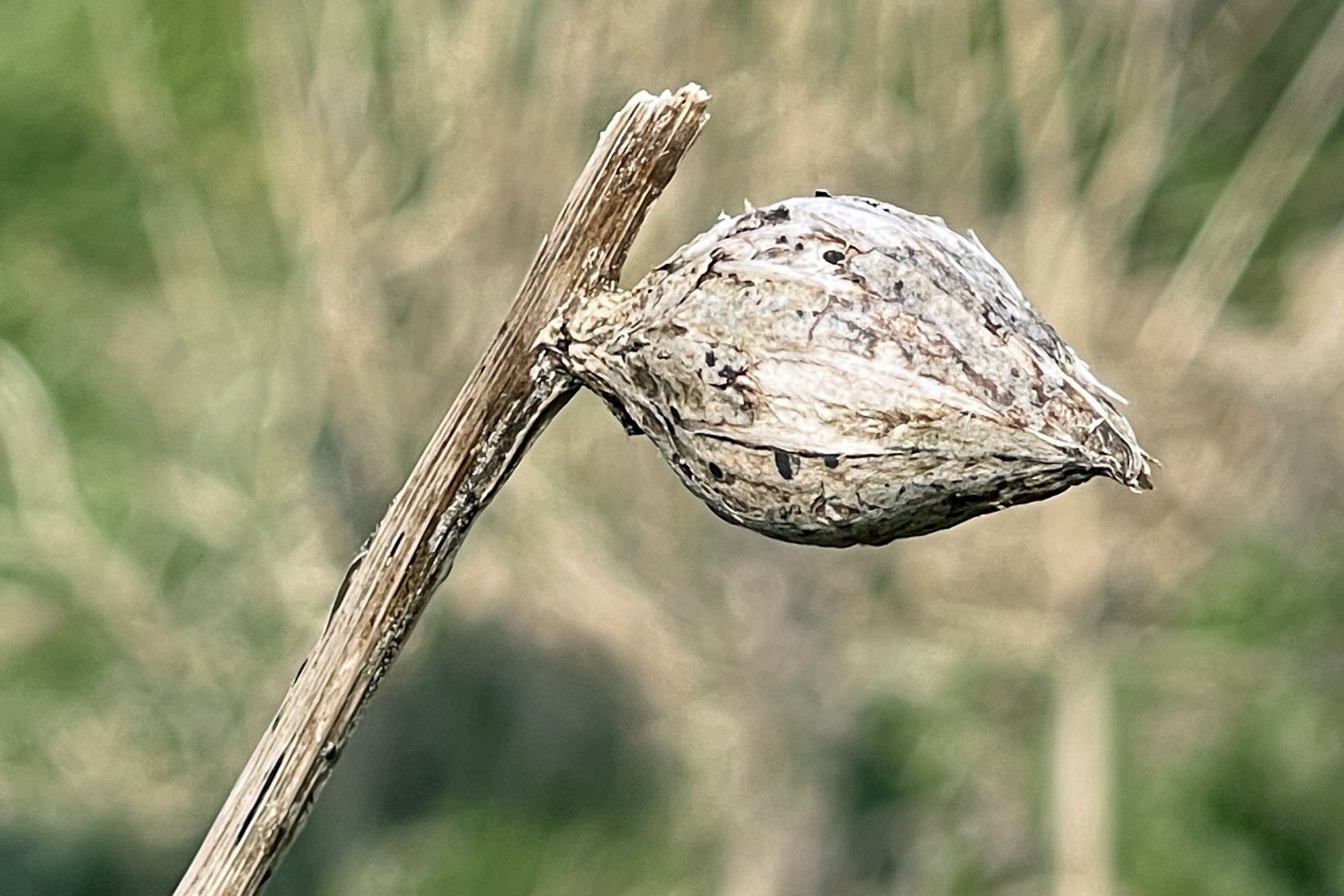
| Taxomyia taxi | a gall midge | Mike Higgott | Gall on Yew |
| Urophora cardui | Thistle Gall Fly | Hazel Graves | Gall on Creeping Thistle |
Hymenoptera Bees and Ants
Five species of Bees as shown. Again, further visits later in the year would be beneficial.
| Anthophora plumipes | Hairy-footed Flower Bee | Steve Woodward and Mike Higgott |
| Bombus lapidarius | Red-tailed Bumblebee | Sara Botterell, Kate Moore |
| Bombus pascuorum | Common Carder Bumblebee | Sara Botterell, Kate Moore |
| Bombus terrestris | Buff-tailed Bumblebee | Sara Botterell, Kate Moore |
| Bombus vestalis | Vestal Cuckoo Bumblebee | Mike Higgott |
Just one ant record of Myrmica sp. was made.
Lepidoptera: Butterflies & Moths
We were lucky that the sun was shining, and we saw a good suite of spring butterflies, multiple specimens for some of the species. Eight species were seen, Brimstone, Comma, Green-veined White, Holly Blue, Orange Tip, Peacock, Small Tortoiseshell, Speckled Wood.
No adult moths, even day flying moths, were seen. Chances of finding many of the dayflying moths would be better in the summer.
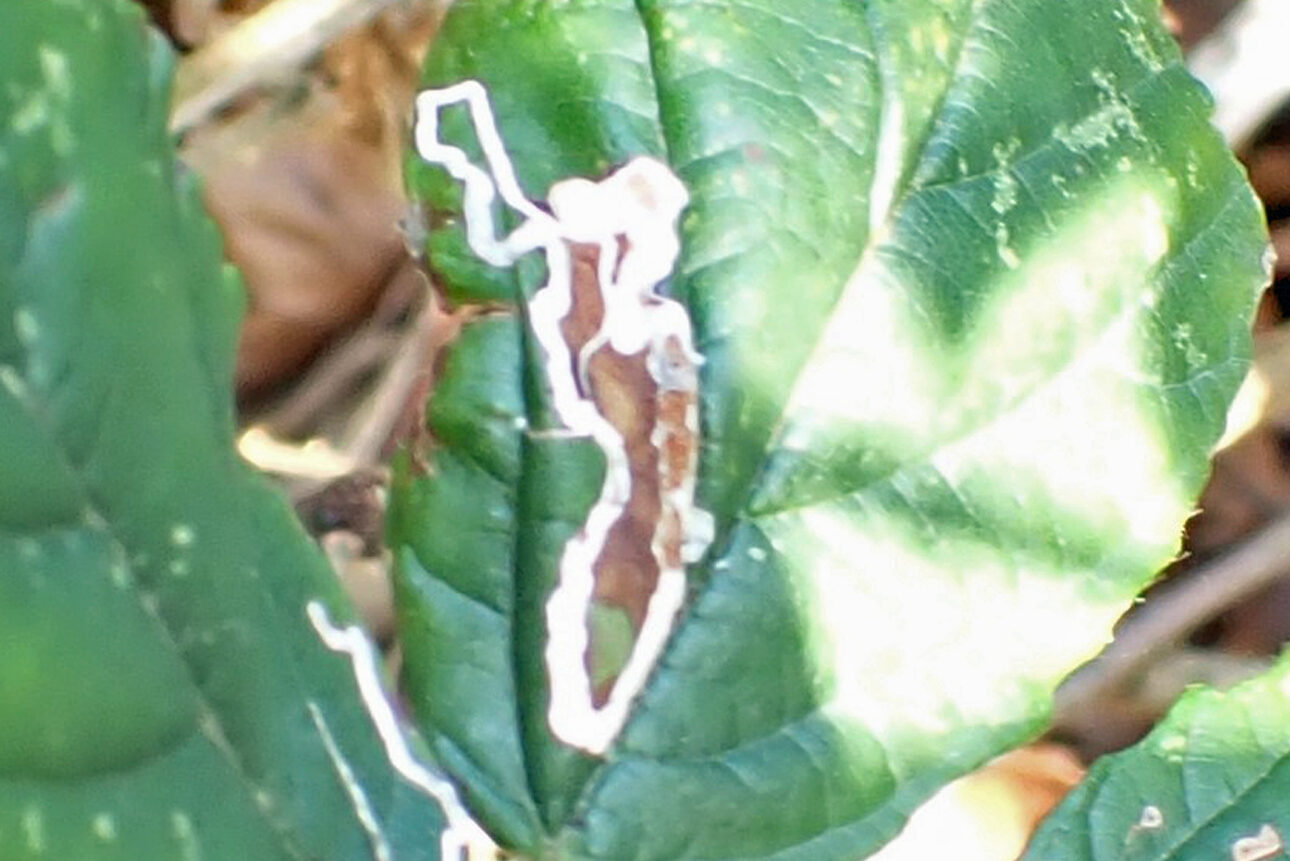
| Stigmella aurella | Golden Dot/Golden Pigmy | Mike Higgott & Hazel Graves | leaf mine |
| Campaea margaritaria | Light Emerald (larva) | Mike Higgott | larva |
Lacewings & Scorpionflies including Megaloptera, the Alder flies
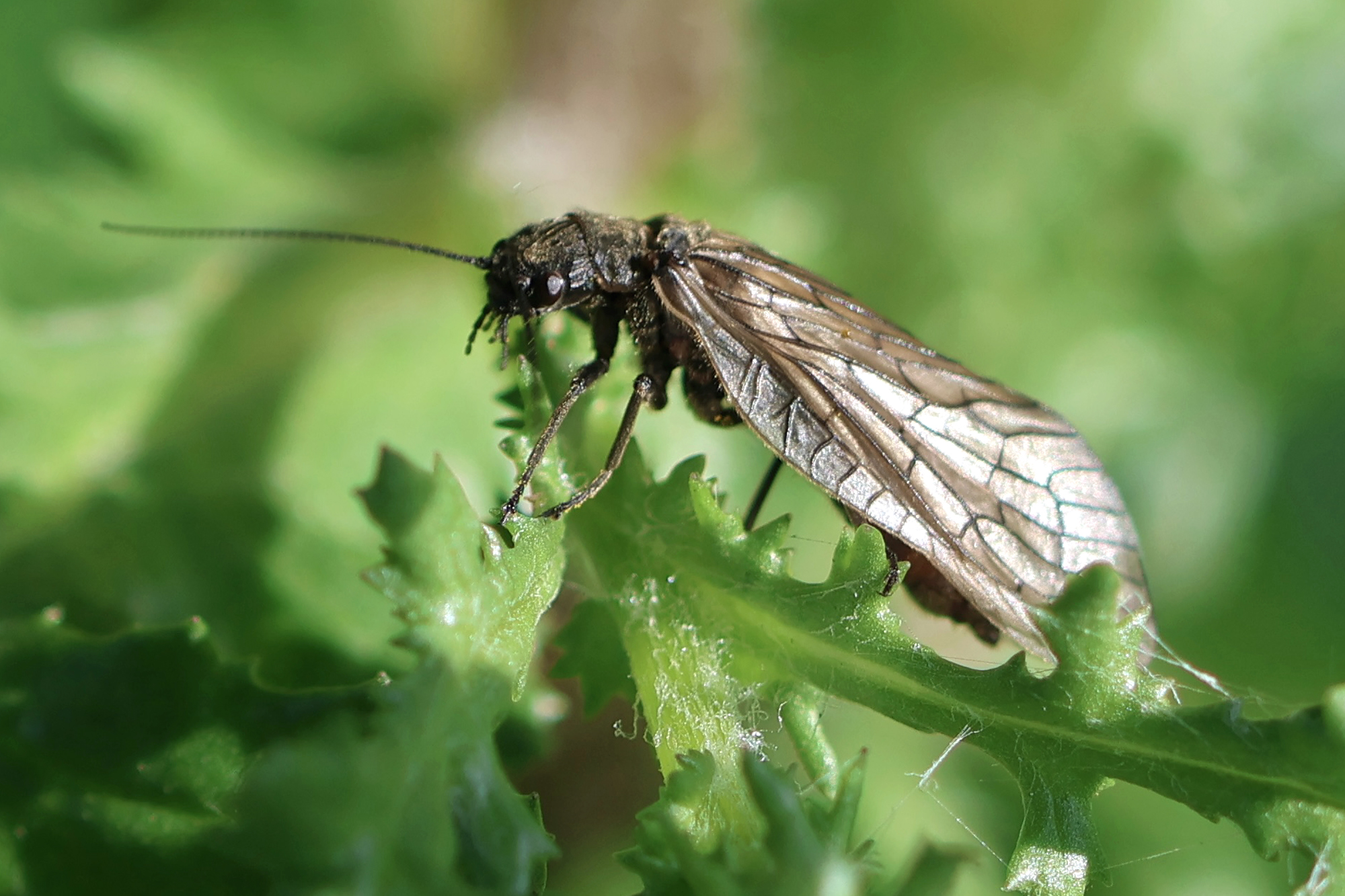
Sialis sp. an Alder Fly appeared on two individual lists and the joint list. There are three very similar species that can only be determined by examining their rear ends. There are just 3 records for Sialis fuliginosa on NatureSpot but 40 records for Sialis lutaria. It would be interesting to catch a specimen on a return visit and conform its identity. This can be done in the hand – no need to kill.
Arachnids: Spiders and Mites
Spiders
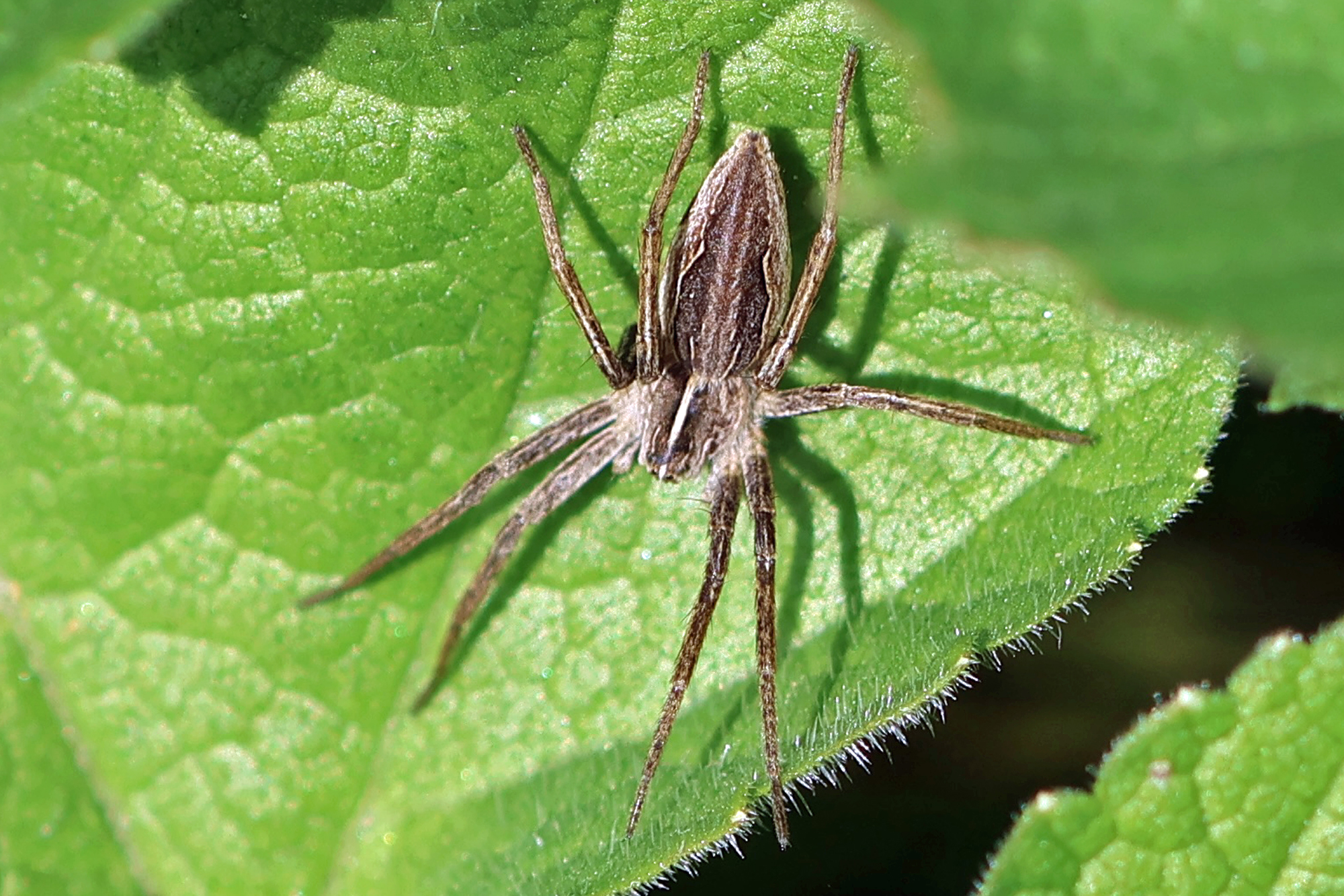
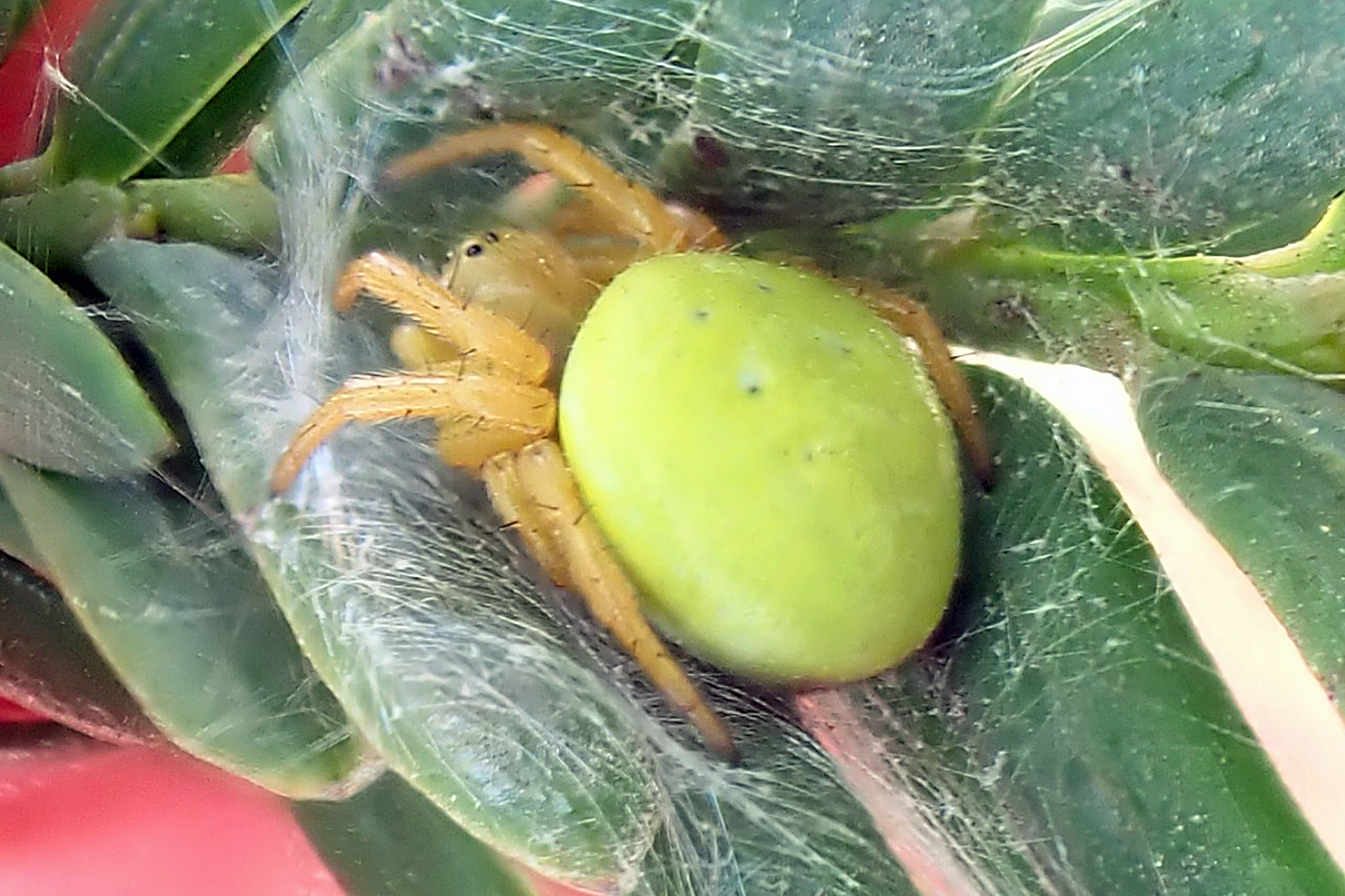
| Araniella cucurbitina sensu lato | A Cucumber Green Orb Spider | Hazel Graves |
| Larinioides cornutus | Furrow Orbweaver | Mike Higgott |
| Pisaura mirabilis | Nursery Web Spider | Mike Higgott & Jenny Brown |
Mites
| Aceria cephalonea agg. | Galls on Sycamore | Small red pouch galls on the upper surface of Sycamore leaves. When fully developed in summer, the galls are less than 3 mm high with a rounded apex. In Spring and early Summer, before being fully developed, these galls may be indistinguishable from Aceria macrorhyncha galls and should therefore be recorded as the species aggregate Aceria cephalonea agg. |
| Cecidophyopsis psilaspis | Galls on Yew | 12 records on NatureSpot. Galls form on the buds of Yew, Taxus baccata. Mites live within the swollen and distorted leaves inside the bud. |
Crustacea: eg Woodlice
Just two species found in the allotted time, but more are likely to be found if searched for.
| Oniscus asellus | Common Shiny Woodlouse | Mike Higgott |
| Porcellio scaber | Common Rough Woodlouse | Mike Higgott |
Conclusion
This visit was a great opportunity for Loughborough Naturalists to visit and record at a local area not previously studied as far as we know. We all enjoyed the meeting and would be happy to visit again in the future when convenient.
The above list provides information for Friends of Garendon Park but may also provide them and other visitors with some guidance on where more targeted visits might be useful.
Many thanks to all who provided records, photographs and helped with identification for this report.
Hazel Graves