Colony Reservoir
Interesting Finds at Colony Reservoir, Charnwood Lodge – October 2025
In early October, the Leicestershire and Rutland Wildlife Trust Thursday volunteers started a number of weeks work around Colony Reservoir at Charnwood Lodge.
For the first time in living memory, this small waterbody had completed dried out over the summer and the silt-filled reservoir floor had gained a hard enough crust for us to safely venture onto the small island which had been completely overcome with Rhododendron.
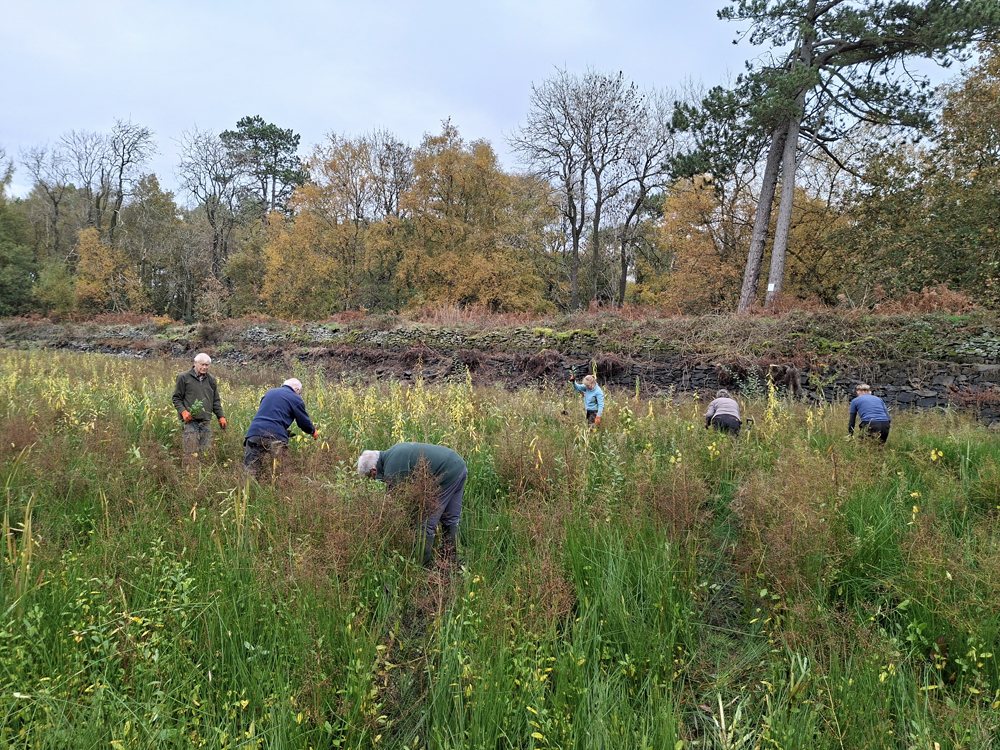
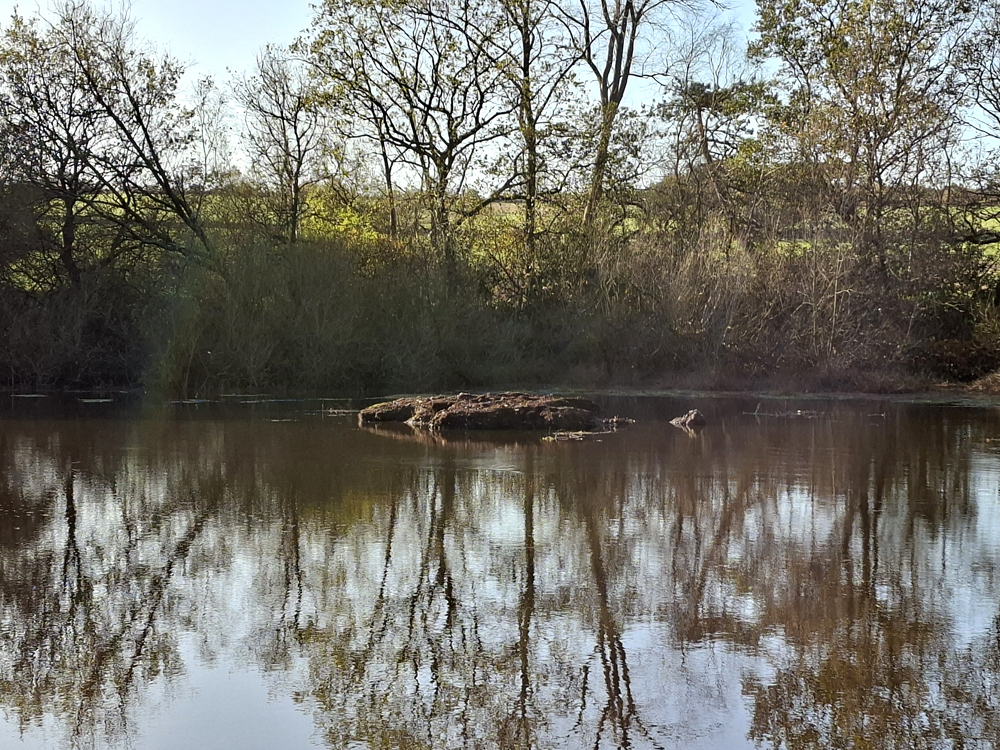
Whilst undertaking its removal, including its enormous roots, some of the island was dismantled leaving only 50% of the island remaining which perhaps a bird could use as a nest site/scrape. I fear that any fox could easily wade across, but time will tell.
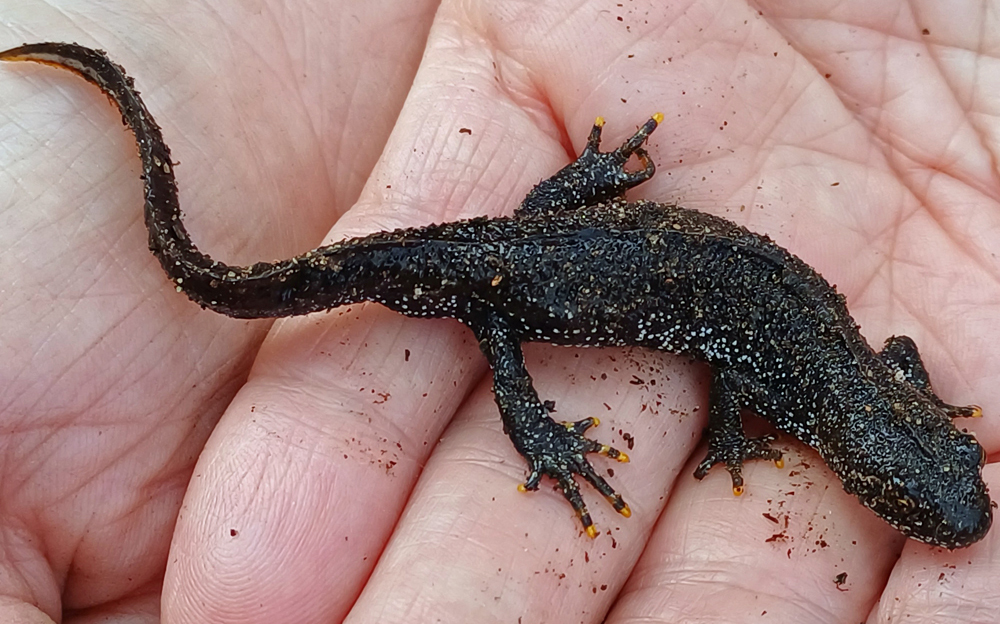
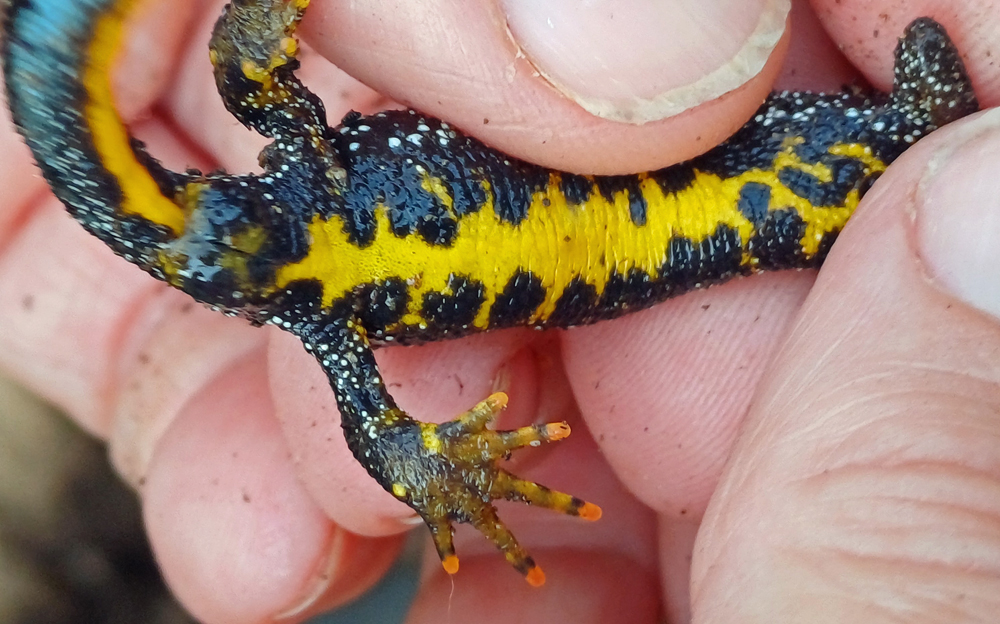
Two lovely discoveries were made during this process. Firstly, we accidentally disturbed a Great Crested Newt, which was promptly removed from further danger and relocated nearby. GC Newts are protected by UK and European legislation but accidental finds, especially during winter when they are most unlikely to be present, is accepted.
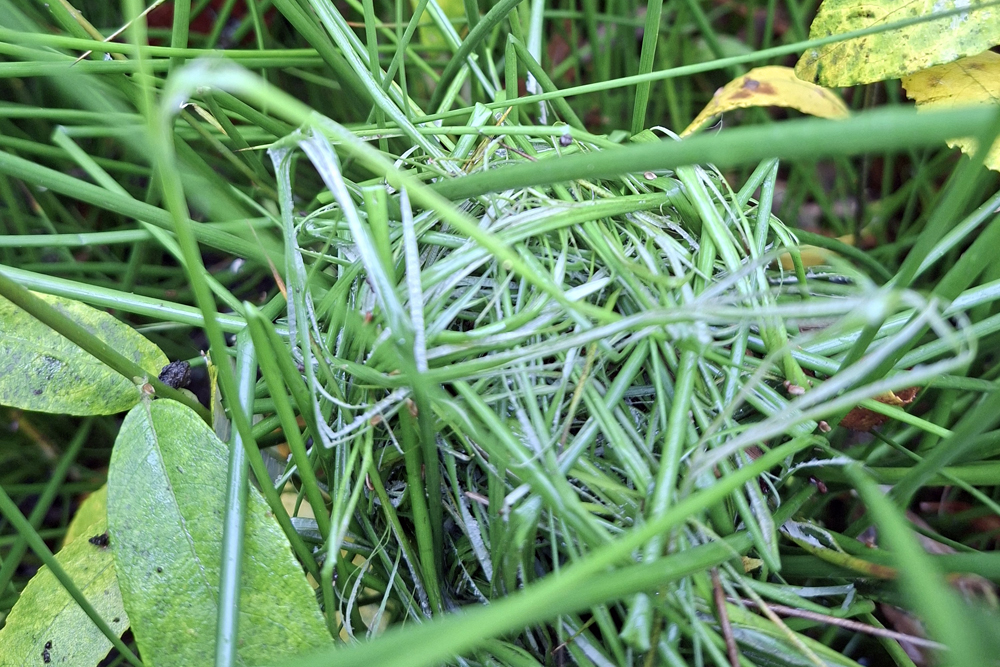
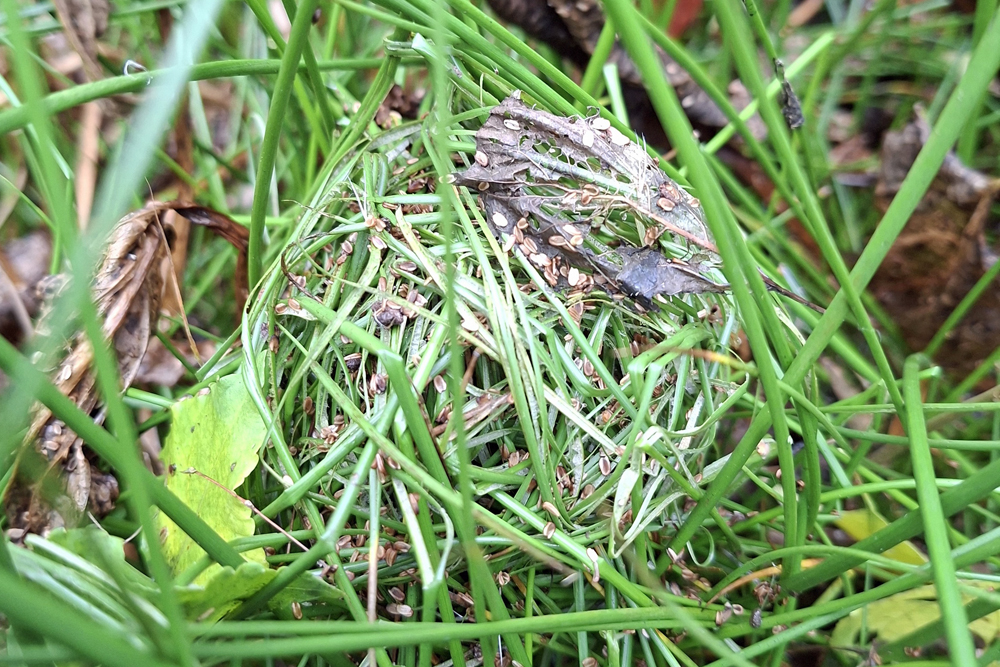
The same dry weather had also created an enormous issue as the Willow had seeded itself into the basin. We didn’t want this small waterbody to be overtaken so it meant mainly hand pulling what we could safely get at. A rough reckoning of between 2,200 – 2,500 were pulled out over the course of our day, a mighty effort which also reaped another reward… a newly created Harvest Mouse nest, followed later by a half-built nest and then another full nest.
Nests are built above ground level with leaves spilt lengthways and then woven together. As these were green with no real discernible entrance or exit hole its best practise NOT to touch or disturb them as it could have been occupied. The size shown (ping-pong ball) represents a solitary nest supporting a single individual.
I have been in conversation with Ian Merrill the County Dragonfly Recorder and asked about the likelihood of larvae surviving the dry period. He responded that some species would need to stay in water throughout, but some may survive in damp silt. He also applauded the volunteers’ efforts in preventing a Willow takeover to preserve this small waterbody. Perhaps we can all keep an eye open to see what develops over during 2026.
Margaret McLoughlin