Field Trip Nailstone Country Park
Field Trip to Nailstone Country Park on 6 October 2026 led by Peter Proudlove
Having made the journey through the village of Battram to the car park that both serves this and the adjourning Battram Woods that we visited in 2024, a small posse of Members faced a slightly damp start as our investigation started with Peter Proudlove our leader for the morning.
Hazel was specifically searching for any Plant Galls in readiness for a talk the following day, so we started by surveying a long hedge line that was a co-terminus boundary with this and the Battram site.
Hazel’s Galls list is at the end of this report. They included a Rust Gall on Bramble – Violet Bramble Rust Phragmidium violaceum, and Dasineura urticae a Midge Gall on Nettle.
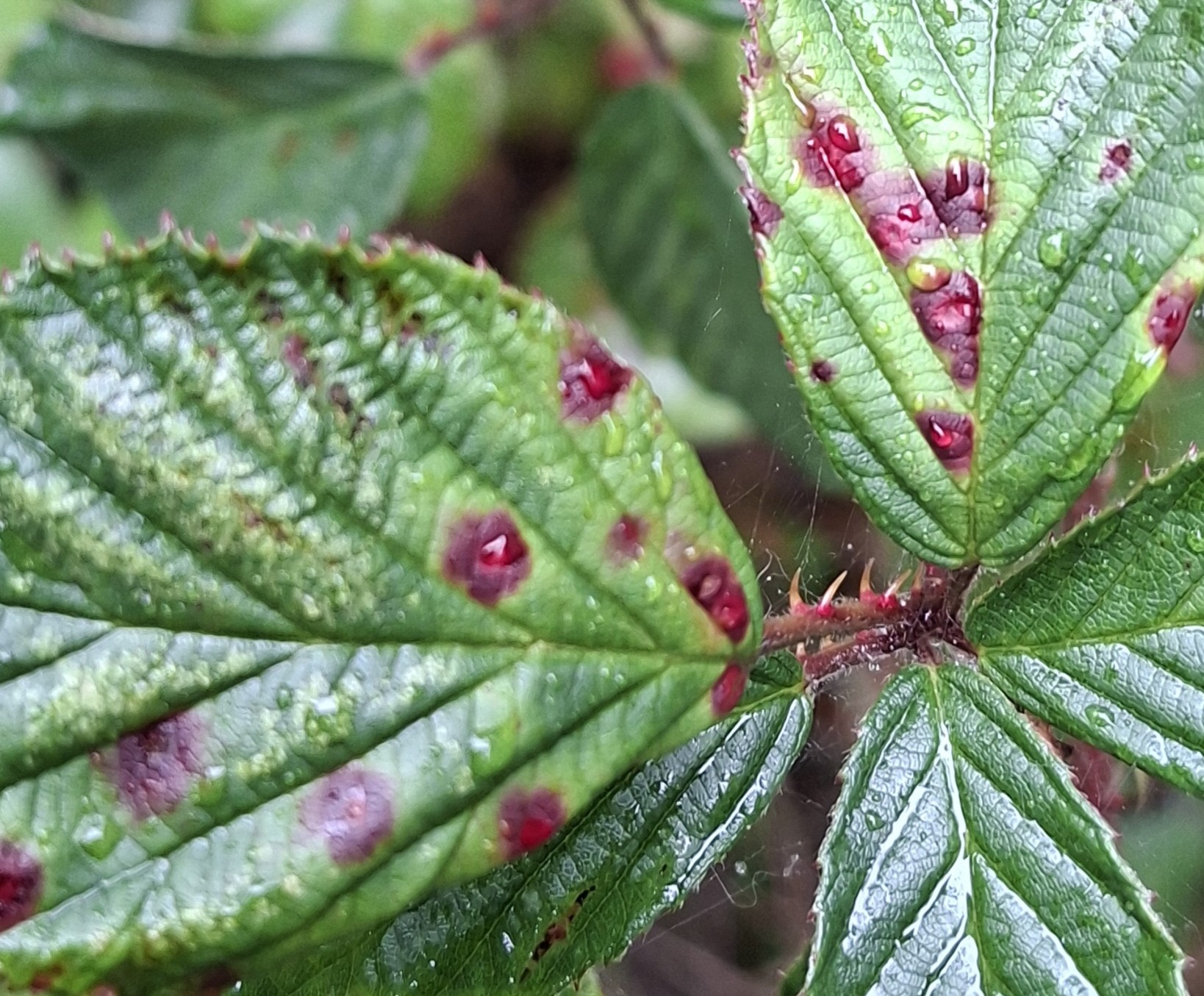
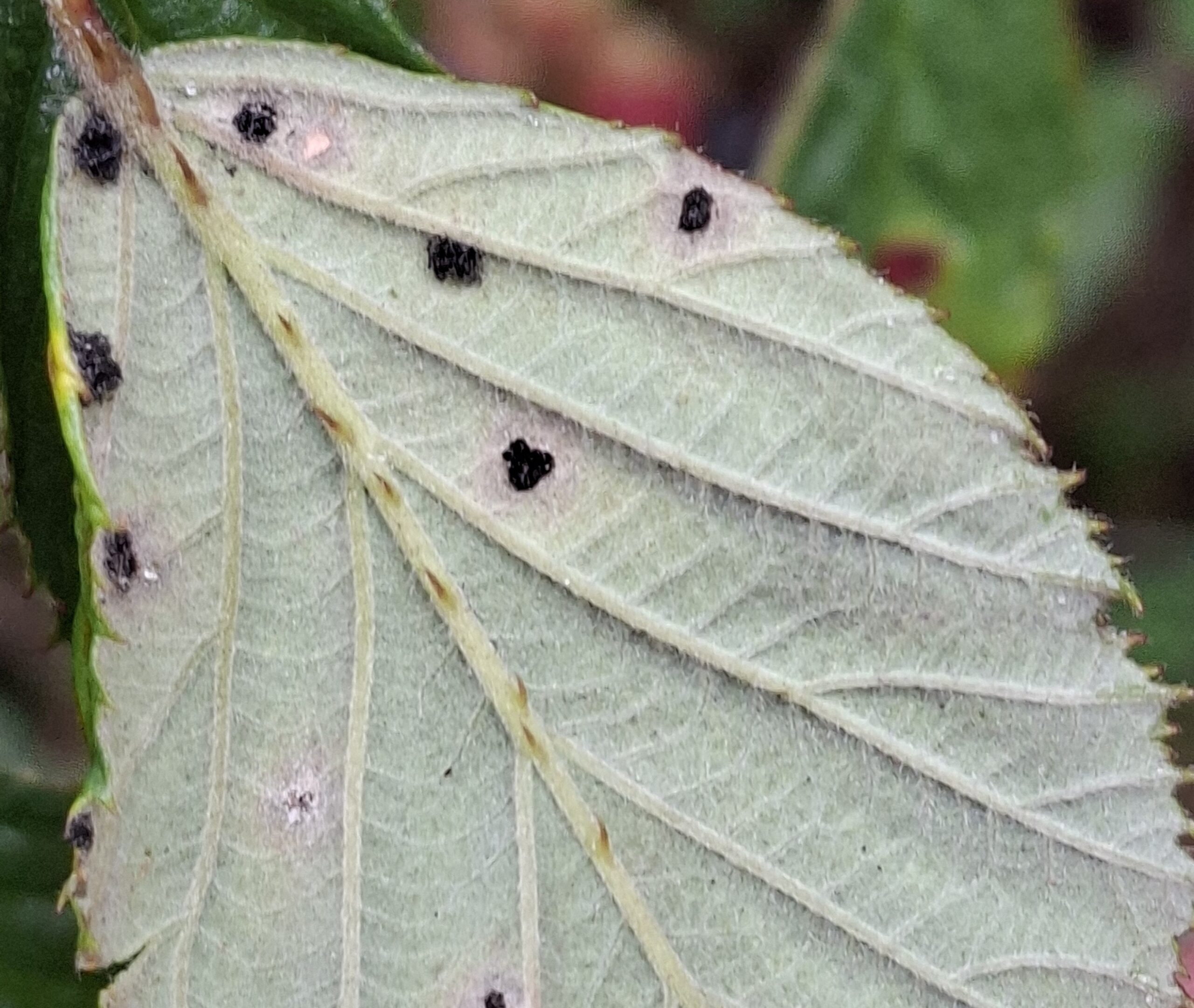
This and other hedges comprised a wonderful variety of plants. Records were made of Hawthorn Crataegus monogyna, Blackthorn Prunus spinosa, Dogwood Cornus sanguinea, Dog-rose Rosa canina agg., and Holly Ilex aquifolium. Mature trees included Pedunculate Oak Quercus robur, Sweet Chestnut Castanea sativa, Hazel Corylus avellana, Grey Willow Salix cinerea (also called Pussy Willow) and an Ash Fraxinus excelsior, which had decayed and fallen. Intertwined at the foot of these species, were Creeping Thistle Cirsium arvense, White Dead-nettle Lamium album, some rough grasses, an unidentified Vetch, Hogweed Heracleum sphondylium, Meadowsweet Filipendula ulmaria, Hedge Bindweed Calystegia sepium or Large Bindweed Calystegia sylvatica (no flowers were available to check if the sepals overlapped or not) and of course the ubiquitous Bramble agg. Rubus fruticosus agg., Cleavers Galium aparine and Wood Avens (Herb Bennet) Geum urbanum.
We were also able to take note of many other plant species both in established areas and others that I believe have been created and ‘sown’. Numerous Common Ragwort Jacobaea vulgaris plants still in flower were scattered across the site.
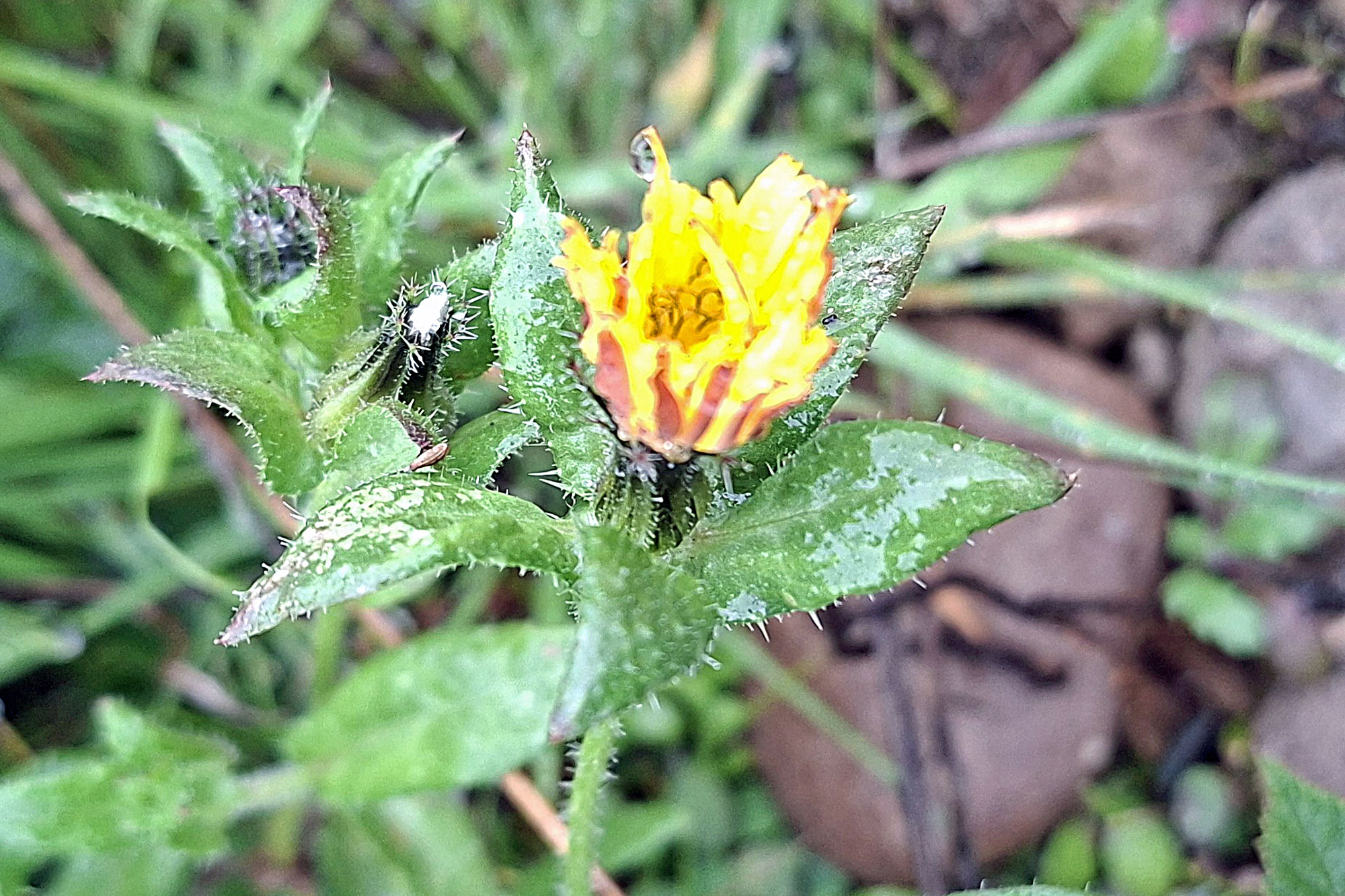
As we turned back in the direction of the now well disguised commercial super-buildings, we came across what looked like an older piece of pasture that had a pleasing variety of new trees planted in the recent past. Surviving or coming back into flower were Red Clover Trifolium pratense and White Clover Trifolium repens, more unflowered vetches, and Wild Angelica Angelica sylvestris, among numerous clumps of Yorkshire-fog Holcus lanatus, Cock’s-foot Dactylis glomerata and other rough grasses. On the edges of the made path were Prickly Sow-thistle Sonchus asper, Bristly Oxtongue Helminthotheca echioides, Red Campion Silene dioica, Weld Reseda luteola and a Melilot species. I failed to take a good enough photo to differentiate between Ribbed Melilot Melilotus officinalis or Tall Melilot Melilotus latissimus – sometimes also called Yellow Meddick.
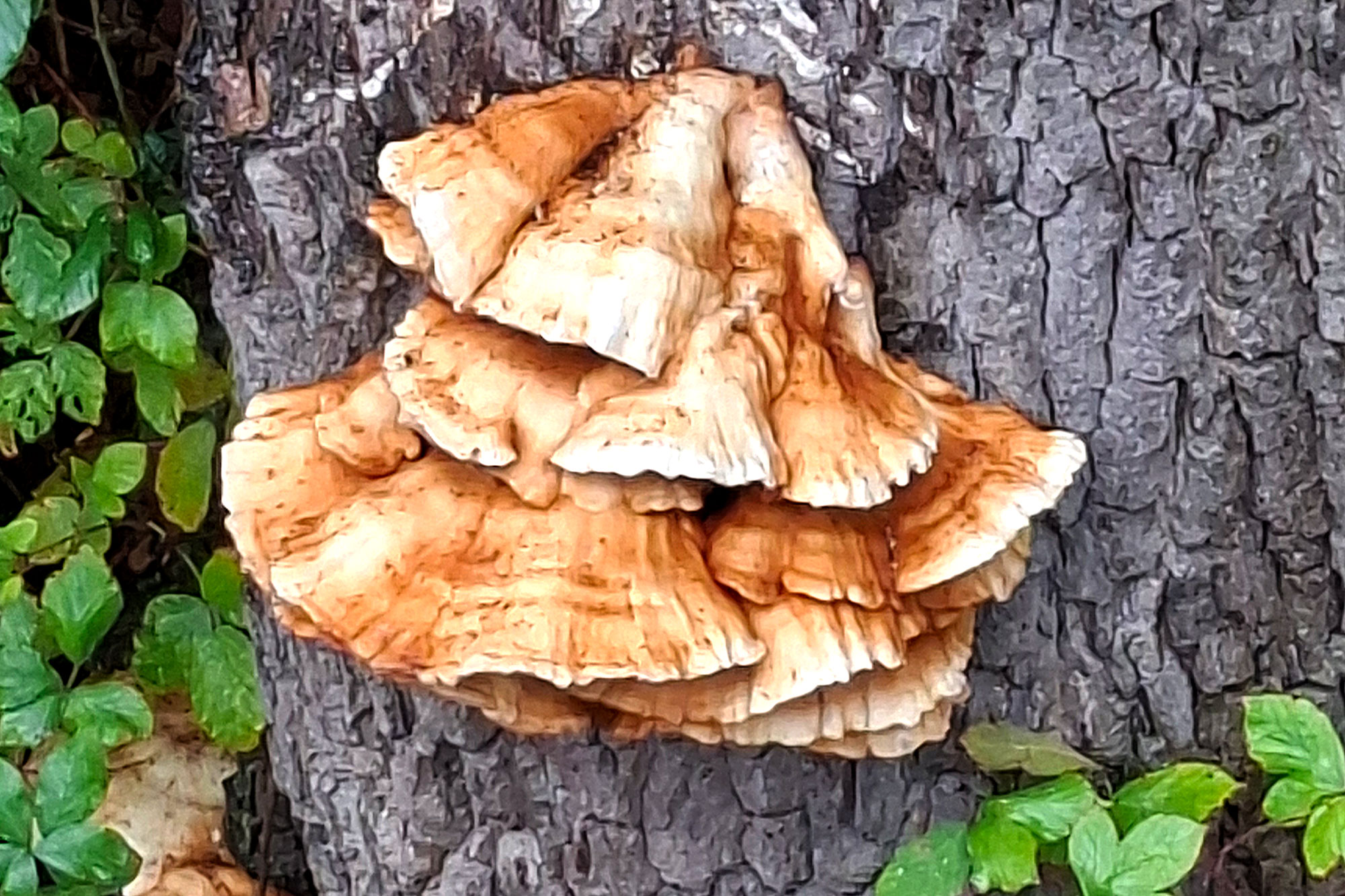
Our first fungus of the day was a rather glorious Chicken of the Woods Laetiporus sulphureus, but little else was seen until we came across a felled tree trunk which provided four species. Hairy Curtain Crust Stereum hirsutum, Turkeytail Trametes versicolor, an Oyster Mushroom Pleurotus sp. and somewhat gone-over Silverleaf Fungus Chondrostereum purpureum.
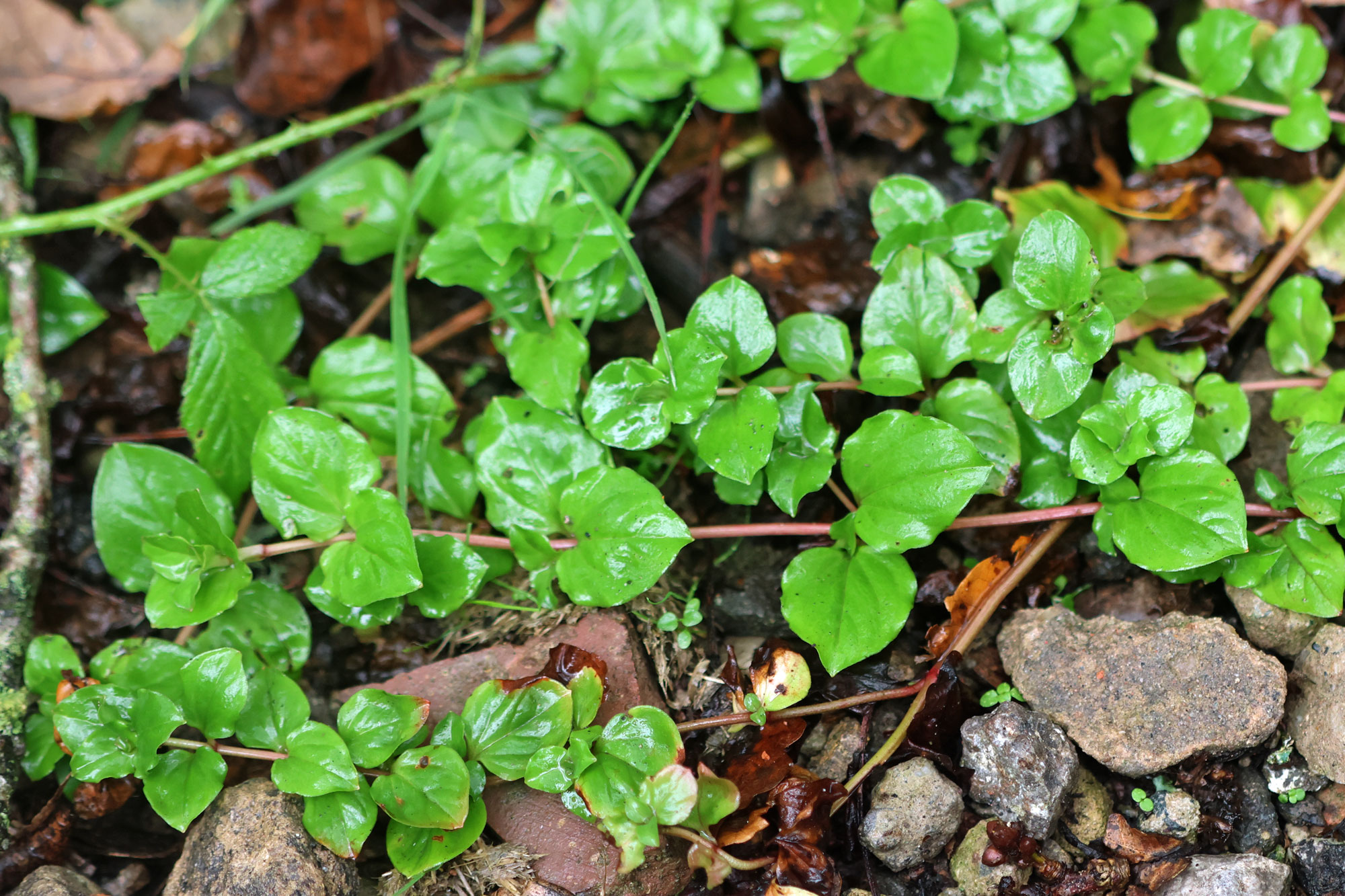
We took a small diversion into an area of mixed woodland with oaks and birches, marked as possibly Ancient Woodland. It provided a mixture of Foxglove Digitalis purpurea and one of the Arctium Burdock species on the edges, Raspberry Rubus idaeus canes, Creeping Buttercup Ranunculus repens, Greater Plantain Plantago major in the footpath, along with Herb-Robert Geranium robertianum, and much to our amusement with Jenny Brown finding Creeping-Jenny Lysimachia nummularia!
Also along the edges were Common Figwort Scrophularia nodosa which was not in flower but had square stem and unpronounced wings and toothed oval leaves, and brown seeds, fighting for space with Purple Toadflax Linaria purpurea.
Towards the end of the woodland a clearing held many dock plants with tightly rolled leaves. On examination the rolls contained Dock Aphid Aphis rumicis. The large leaves of Colt’s-foot Tussilago farfara covered another open patch, the leaves showing many fungal galls as in the table below but also contained the mines of the Tephritid fly Acidia cognata.
Somewhat unsurprisingly it was a poor visit for seeing or hearing our feathered friends. Woodpigeon, Buzzard and a Robin hopping around the lower vegetation, the large white rump of a Jay disappearing into a hedge, and the soft high audible call of Long-tailed Tits were the only records.
Not all records are mentioned but a better-than-expected recording day with 90 plus records, and to top the day off a lovely warm pub visit to the Old Thatched Inn at Stanton under Bardon.
Margaret McLoughlin
Plant Gall List
| Group | Common name | Scientific name | Description |
| acarine (Acari) | Aceria macrochela | Aceria macrochela | Mite gall on Field Maple |
| fungus | Violet Bramble Rust | Phragmidium violaceum | Rust gall on Bramble |
| fungus | Puccinia poarum | Puccinia poarum | Rust gall on Colt’s-foot |
| insect – hymenopteran | Marble Gall Causer | Andricus kollari f. agamic | Wasp Gall on Oak |
| insect – hymenopteran | Robin’s Pin-Cushion Gall | Diplolepis rosae | Wasp Gall on Dog-rose |
| insect – hymenopteran | Smooth-spangle Causer | Neuroterus albipes f. agamic | Wasp Gall on Oak |
| insect – true bug (Hemiptera) | Psyllopsis fraxini agg. | Psyllopsis fraxini agg. | Psyllid gall on Ash |
| insect – true fly (Diptera) | Dasineura urticae | Dasineura urticae | Midge gall on Nettle |
| insect – true fly (Diptera) | Iteomyia major | Iteomyia major | Midge gall on Sallow |
| insect – true fly (Diptera) | Thistle Gall Fly | Urophora cardui | Tephritid fly gall on Creeping Thistle |